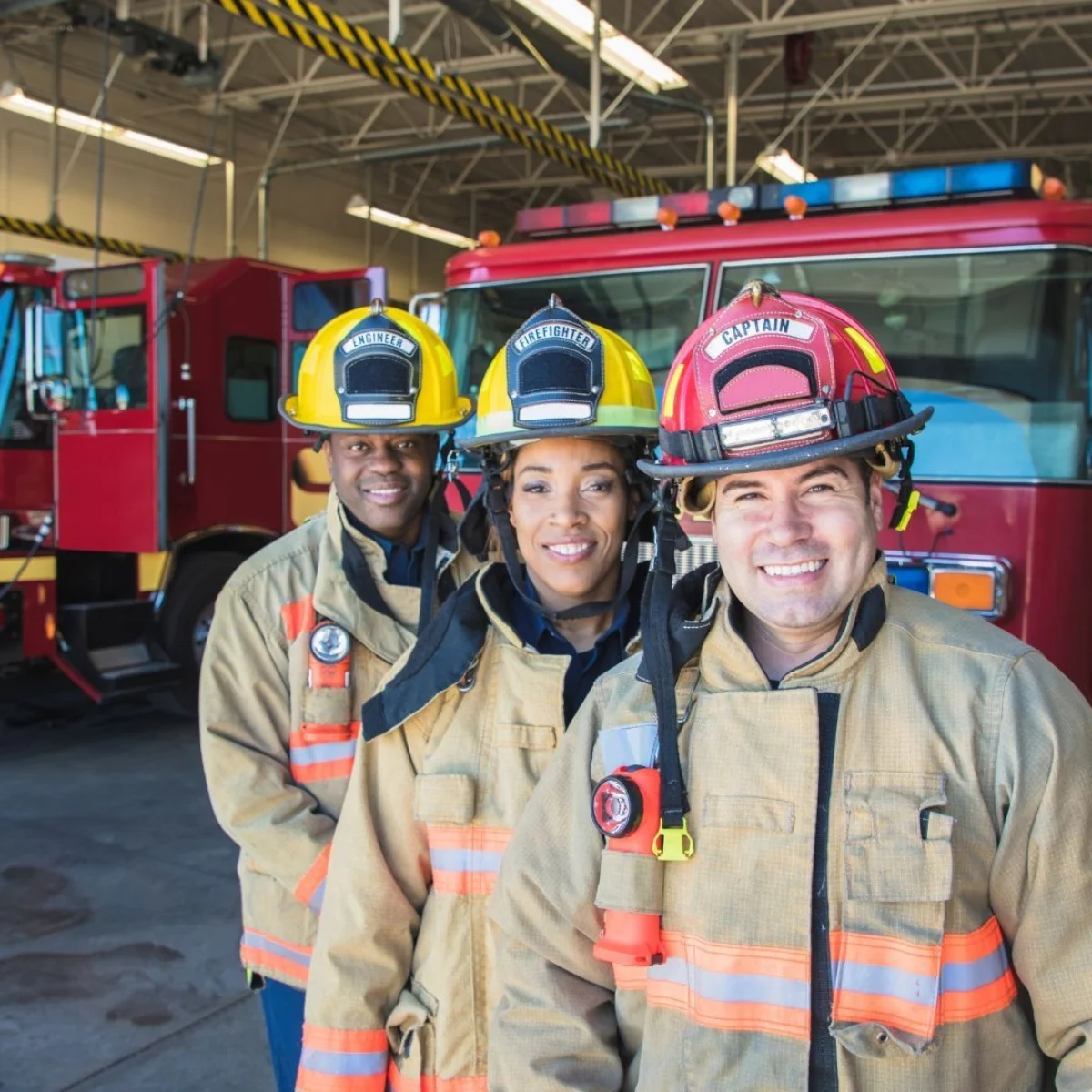
The first step to becoming a firefighter usually isn't firefighting but becoming an EMT.
Most departments want you to be certified as an emergency medical technician before they'll even take your application, because the majority of calls firefighters respond to are medical, not fires. (Yeah, that surprised us too!)
And getting hired is less like applying for a job and more like competing through a selection process; it involves a written exam, a physical test, an interview, a background check, and then the academy. And then you can apply for open positions.
None of it takes a college degree. What it takes is preparation and knowing the order in which things happen.
What Does a Firefighter Do?
Firefighters respond to emergencies, but that's a broader job than the name suggests.
Yes, they fight fires, from structure fires to vehicle and brush fires. But on most shifts, the bigger share of calls goes to medical emergencies, car accidents, hazardous-material spills, and rescues. That's why medical training is at the center of the job.
Between calls, you’ll be training, doing equipment checks, completing fire-safety inspections, and staying in shape. Crews live at the station during shifts, which often run 24 hours on followed by 48 or 72 hours off, so the schedule frees up large stretches of the week.
Where you work varies too. Most firefighters serve city or county departments, but others work for state agencies, federal wildland crews, airports, or industrial sites, each with its own rhythm and pay.
It's physical, team-based, and unpredictable, which is part of the draw. Curious whether it fits how you work? SkillUp's Work Styles Quiz tends to flag firefighting for the Social and Enterprising styles: people who want to help others and can make fast calls under pressure.
What Are the Requirements To Become a Firefighter?
To start, departments generally ask for:
- A high school diploma or GED: No college degree needed, though some candidates add a fire science certificate or associate degree to stand out.
- Age 18 or older: A few departments set the minimum at 21, and many have an upper age limit too.
- A valid driver's license: You'll be operating or riding emergency vehicles.
- EMT certification: Most departments expect it up front. More on why below.
- A clean background and medical clearance: Plan on a background check, a drug screen, and a physical exam.
Departments also screen vision, hearing, and overall fitness, so it's worth getting in shape early rather than cramming right before the physical test.
How Long Does It Take To Become a Firefighter?
The timeline depends on the steps.
- EMT certification takes about three to six months.
- The fire academy itself usually runs twelve to sixteen weeks of full-time training, where you learn fire science, rescue techniques, hazmat response, and hands-on skills.
The slow part is the hiring cycle. Between applying, testing, interviewing, and waiting for an academy class to open, the full process often takes six to twelve months, sometimes longer.
Passing the written exam usually lands you on an eligibility list, ranked by score, and departments hire from the top as openings come up. A strong score can move you up the list and shorten the wait.
So while the training is short, patience pays off. Many people work as EMTs while they wait for a firefighter slot to open, which keeps a paycheck coming and builds the exact experience departments want to see.
Do You Need To Be an EMT to Become a Firefighter?
In most places, yes. Because medical calls make up the bulk of what fire departments handle, EMT certification has become close to standard. Some departments go further and prefer or want paramedic certification, which pays more and takes longer to earn.
An EMT course takes a few months; a paramedic credential can take a year or more. Most people start with EMT, get hired, and pursue paramedic later if they want the pay bump.
The upside is bigger than the hurdle. Getting certified first gives you a paying job in the field while you work toward firefighting, plus the patient-care skills you'll use on the truck from day one. Browse EMT and firefighter training on SkillUp to find a program near you.
Think of EMT certification as the on-ramp, not a detour.
What Is the Firefighter Physical Test (CPAT)?
Most departments use the Candidate Physical Ability Test, or CPAT, a timed, standardized course that mirrors the real demands of the job.
In full gear, you move through stations like a stair climb, hose drag, equipment carry, ladder raise, forcible entry, search, and a rescue drag, all against the clock. It's built to show whether you can do the physical work safely.
The CPAT is eight standardized events with a time limit of about ten minutes, and it's the same nationwide, so a pass often transfers between departments that accept it.
It's pass or fail, and it's where a lot of candidates wash out. The good news is that the events are public and standardized, so you can train for them. Many candidates spend a few months building stamina and grip strength before test day.
How Much Do Firefighters Make?
The national median is $59,530 a year as of 2024.
New firefighters often start in the low $30,000s, while experienced firefighters and officers can clear $90,000 or more. Overtime, which is common with 24-hour shifts, can push earnings higher still.
Pay depends heavily on location and department. Big-city and state departments tend to pay more than small rural ones, so where you apply shapes the number.
The benefits matter as much as the salary, too. Most firefighter jobs come with a pension and solid health coverage, which is a big reason the work draws long careers rather than short stints.
Is Firefighting a Good Career?
For the right person, it's one of the most stable careers you can enter without a degree.
Employment is projected to grow about 3% through 2034, with roughly 27,100 openings a year as firefighters retire or move on. It's steady rather than explosive, and the jobs can't be sent overseas.
There's room to climb, too. Firefighters move up to engineer, lieutenant, and captain, or specialize in areas like hazmat, technical rescue, or fire investigation, each with added pay.
The bigger draws are the pension, the schedule that frees up multiple days a week, and the allure of doing work that matters in your own community. Few jobs give you that combination without years of school.
It's competitive to get into, and the work is demanding and sometimes dangerous. But for people who want purpose, a team, and security without a degree, this path is hard to beat.
How to Start Your Firefighter Career
You don't need everything lined up to take the first step.
- Not sure if it's your fit? Start with the Work Styles Quiz.
- Ready to move? Get your EMT certification through SkillUp's training catalog, since that's the prerequisite that unlocks the rest.
- Then watch for open firefighter and EMT roles and your local department's testing dates.
- Want the role overview in one place first? The firefighter career page lays out duties, pay, and certifications at a glance.
- From there, create a free SkillUp profile to save programs, set your goal, and track each step from EMT class to academy.
The path is long enough to take seriously and short enough to start now. Step one is the EMT.
FAQs
Do you need a degree to become a firefighter?
No. A high school diploma or GED plus EMT certification is the standard starting point. Some candidates add a fire science certificate or associate degree to be more competitive, but it's optional, not a prerequisite.
Can you become a firefighter through volunteering?
Often, yes, and it's a smart route. Many people start as volunteer firefighters to gain experience, training, and a foot in the door before applying for paid positions. Volunteer departments frequently cover your Firefighter I and II training, which strengthens a paid application later.
How competitive is it to get hired?
Very, especially in popular departments (think NYFD). A single opening can draw hundreds of applicants, which is why your exam scores and CPAT performance carry so much weight. Being EMT-certified, physically prepared, and willing to apply to several departments improves your odds a lot.