For Job Seekers
For Career Exploring
Become a Partner
Search
Graphic designers turn ideas into visuals that inform, inspire, and influence. From social media graphics and brand logos to websites and packaging, they shape how businesses communicate with the world. If you're creative, detail-focused, and enjoy visual problem-solving, graphic design could be a solid path forward.
Graphic designers create digital and print visuals using tools like Adobe Illustrator, Photoshop, Canva, or Figma. Depending on the industry, you might design marketing materials, product packaging, web layouts, motion graphics, or brand guidelines.
Job titles vary depending on where and how you work:
• Graphic Designer
• Visual Designer
• Digital Designer
• Creative Specialist
• Marketing Designer
• Brand Designer
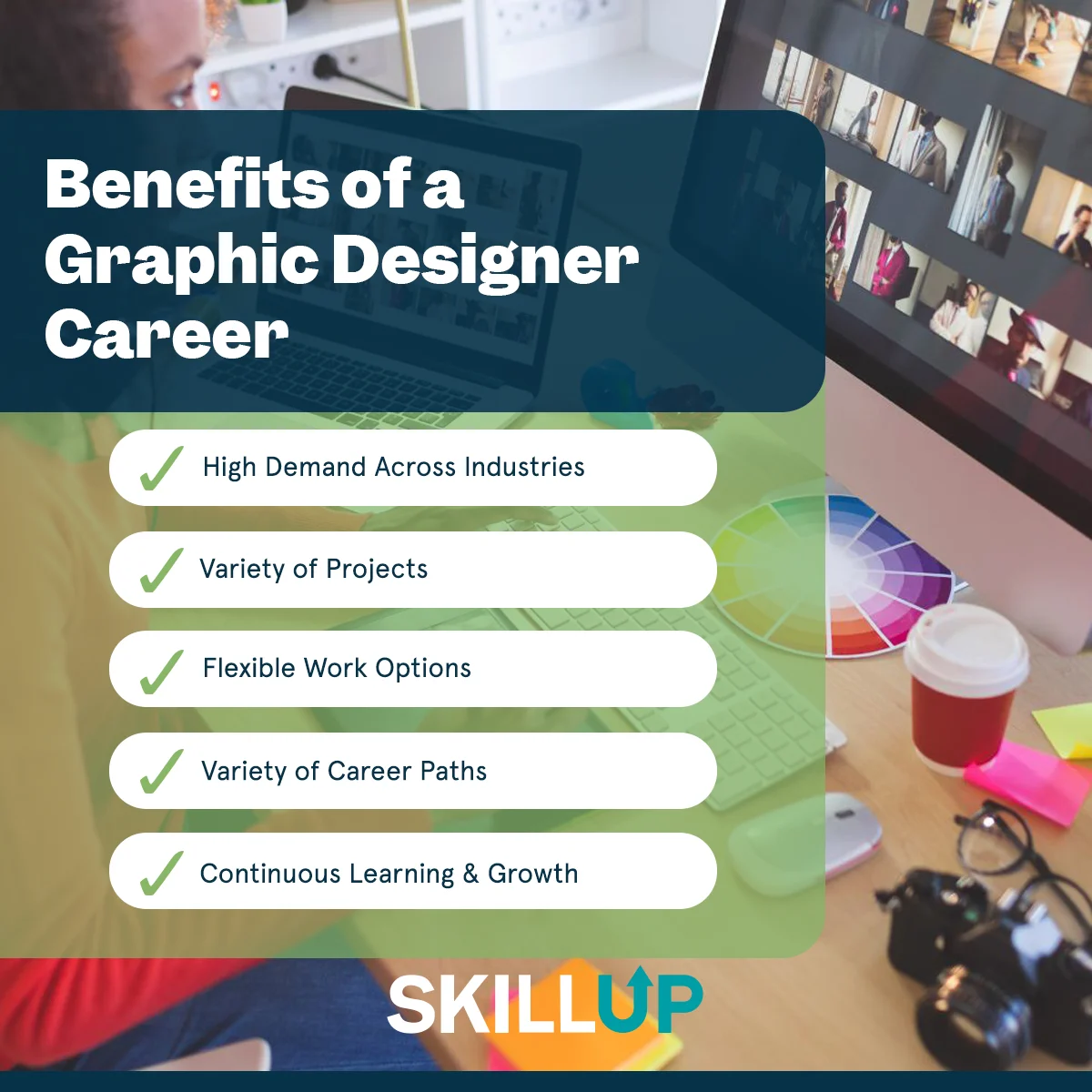
You don’t need a degree to build a design career, but you will need a strong portfolio and working knowledge of industry tools. Many designers get started through online courses, internships, or freelance work.
Here’s a common path:
Graduate from high school or earn a GED: This is the baseline requirement for most design bootcamps or internships.
Learn design software: Master tools like Adobe Illustrator, Photoshop, InDesign, or Figma. You can learn these through online platforms or hands-on practice.
Take online courses or bootcamps: Look for beginner courses in design principles, typography, color theory, and layout.
Keep learning: IT changes fast. Building your skills over time (through certifications or self-study) can lead to better roles and higher pay.
Apply for internships, freelance work, or entry-level roles: Titles like “Junior Designer” or “Creative Assistant” are great stepping stones.
Yes. What matters most is your skill level, design eye, and portfolio, not your academic background.
Absolutely. Many designers work independently or on flexible teams. A strong portfolio and solid communication skills are key.
Marketing agencies, startups, in-house corporate teams, publishing, media, nonprofits, or your own freelance business.
They often overlap, but visual designers usually focus more on digital design (web, apps, etc.), while graphic designers may work across both print and digital.
It can be competitive, but many designers start with small projects or freelance gigs and grow from there. A strong portfolio and willingness to learn go a long way.