
At SkillUp, we track what's working for the workers we serve. In this case, it’s one of the clearest success stories in our catalog: Skilled Trades. From apprenticeships to full-time roles, trades are opening doors for people skilled through alternative routes (STARs), and the numbers tell a compelling story.
A Growing Share of Our Catalog
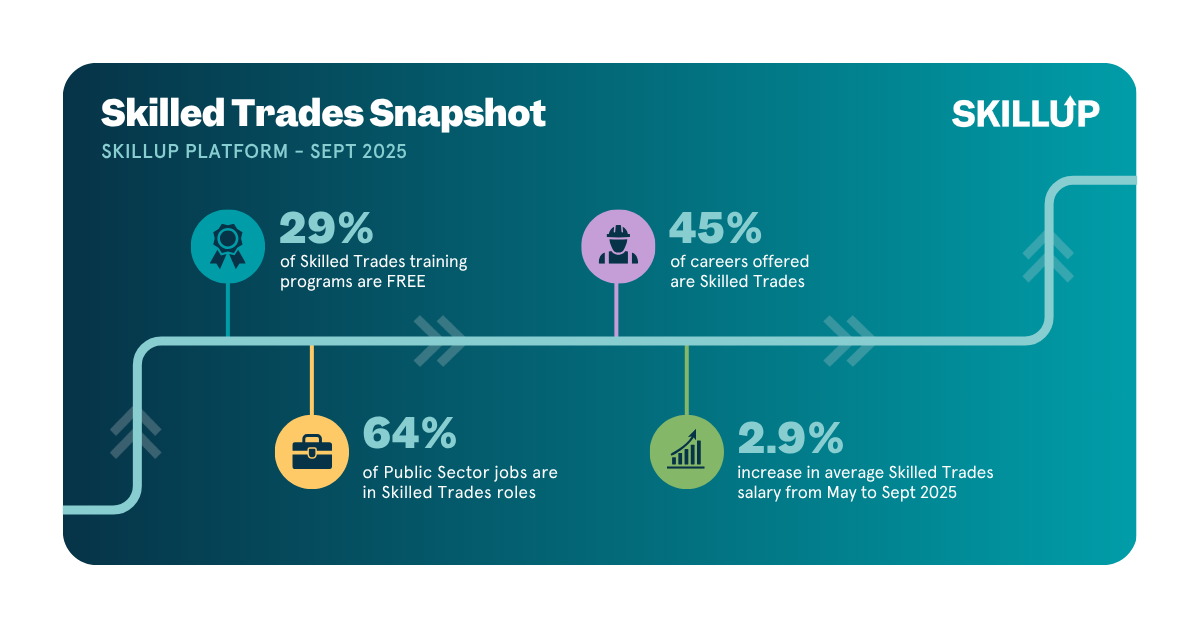
Skilled Trades now make up 45% of SkillUp's career catalog, up from 39% in May 2025, a meaningful jump in just a few months. Across our training collection, we offer more than 2,000 Skilled Trades pathways, with 29% of those programs available at no cost. That low barrier to entry matters enormously for STARs navigating a career transition on a tight budget.
Three pathways lead into Skilled Trades on our platform:
- Traditional training programs: Structured, instructor-led instruction
- Apprenticeships: On-the-job experience paired with classroom learning
- Earn and Learn programs: Full-time employment with integrated training and a livable wage from day one
Training and job offerings for each of these paths have stayed consistent across our platform.
Public Sector Jobs: A Stable, High-Opportunity Path
Public sector employment proves a strong match for Skilled Trades: 64% of public sector jobs on our platform fall within Skilled Trades categories. Our partnership with Opportunity@Work supports expanding access to these roles as part of a broader effort to place more STARs in government positions. Even amid recent federal uncertainty, public sector jobs offer stability that many private sector roles can't match.
Who's Pursuing Skilled Trades?
Our data gives us a clearer picture of who's engaging with Skilled Trades content, and it points to an opportunity worth addressing directly.
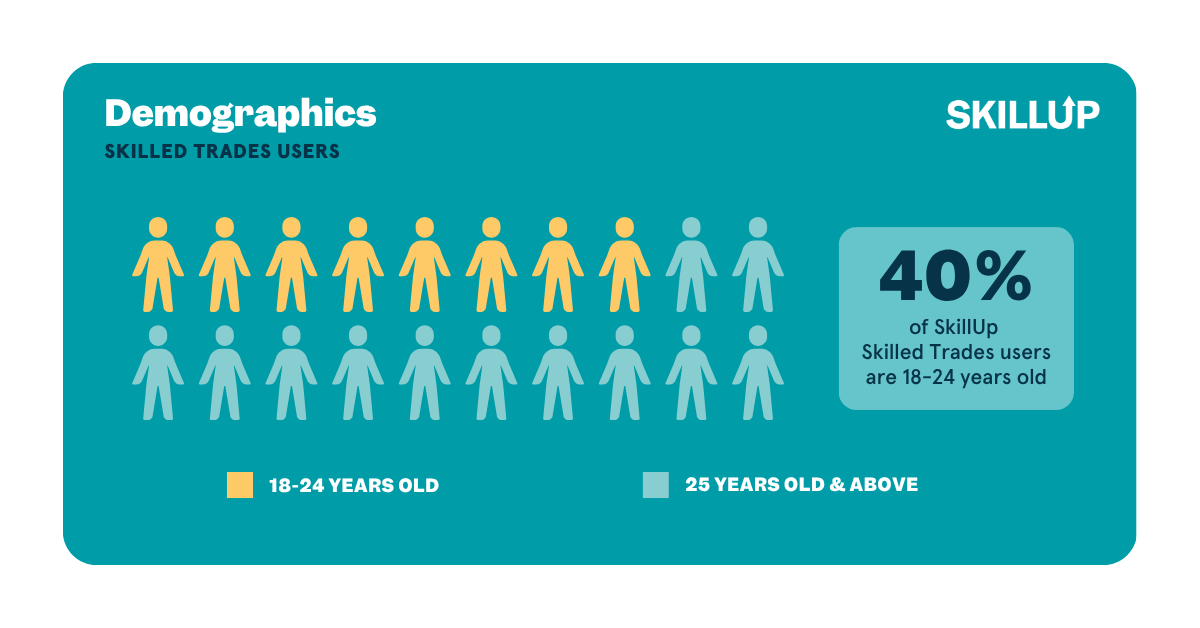
Training program applicants skew younger, with 40% falling in the 18–24 age range, suggesting that STARs are increasingly exploring trades at the start of their careers rather than as a midlife pivot. Applicants are largely male-identifying (70%), a gap that has held steady since we first reported it in June.
That gender gap reflects a persistent barrier in the industry, and SkillUp's catalog includes programs working to close it. Initiatives like Women @ Work Apprenticeship in Charlotte, North Carolina, and Women Build Illinois specifically train women in plumbing, carpentry, and pipefitting, and prepare them to navigate the professional dynamics that come with male-dominated fields.
From September 2023 to September 2025, 15,520 SkillUp profile creators have engaged with Skilled Trades career opportunities, which represents 27% of total profile creators. Users are more likely to engage with the training catalog than the jobs catalog (20% click-apply on training vs. 6% on jobs), which tracks with what we'd expect: many STARs, particularly younger users, are in an exploration phase before they feel ready to apply to jobs directly.
Where the Demand Is
The top three most-applied-to Skilled Trades in our training catalog:
- 🔌 Electrician grew from 32% in May to 39% in September
- 🪚 Carpenter grew from 25% in May to 28% in September
- 🛁 Plumber grew from 16% in May to 20% in September
The top three most-applied-to in our jobs catalog:
- 🛰️ Telecommunications Equipment Installers and Repairers
- 🚙 Automotive Service Technicians and Mechanics
- 💡 Electricians
Job catalog engagement in these roles has remained stable since May, with consistent demand without much volatility. On the employer side, the number of American Opportunity Index (AOI) employers offering Skilled Trades jobs on our platform grew from 28 to 35, and their share of our total jobs catalog jumped from 1.4% to 5.2%. More quality employers mean more opportunities for STARs.
The ROI Is Hard to Argue With
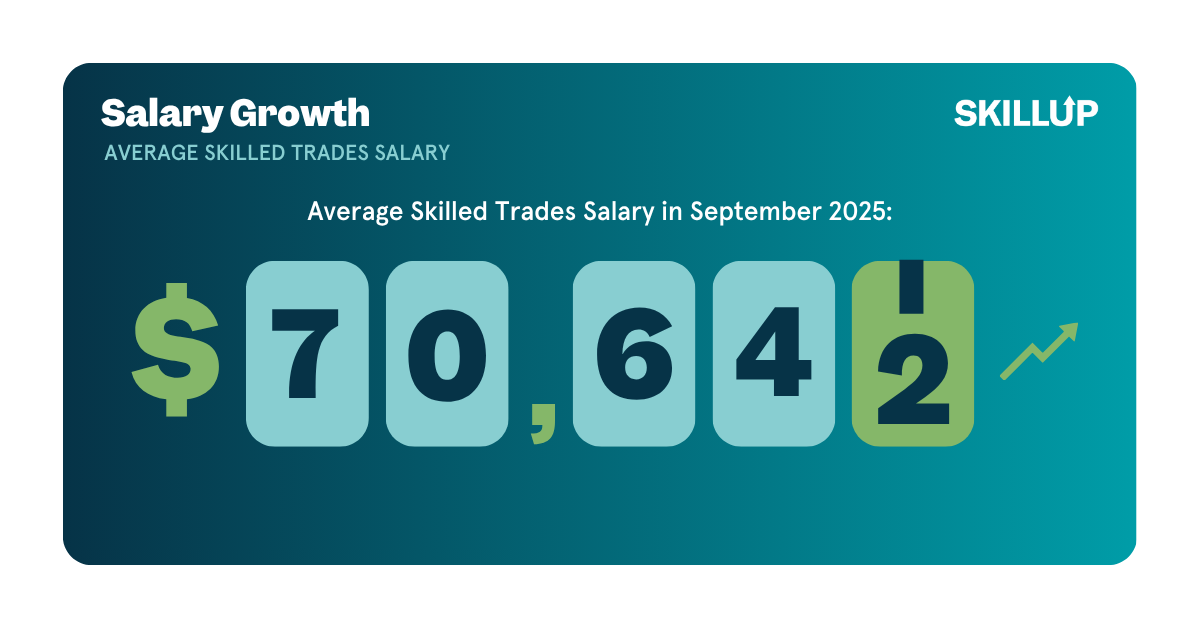
One of the most striking data points in this report is that the average cost of Skilled Trades training dropped from $2,446 in May to $2,038 in September, while the average salary for Skilled Trades roles grew from $68,587 to $70,642 over the same period.
That's a widening gap between what it costs to get trained and what you earn when you do, a return on investment that four-year degree programs rarely match. For STARs who have been locked out of higher-wage work because of credential requirements, trades offer a path in without the debt burden that follows.
Regional Growth Is Accelerating
SkillUp partners with more than 50 regional locations, and Skilled Trades momentum is building at the local level.
- 10% more job clickouts and 5% more training clickouts at regional levels, May to September
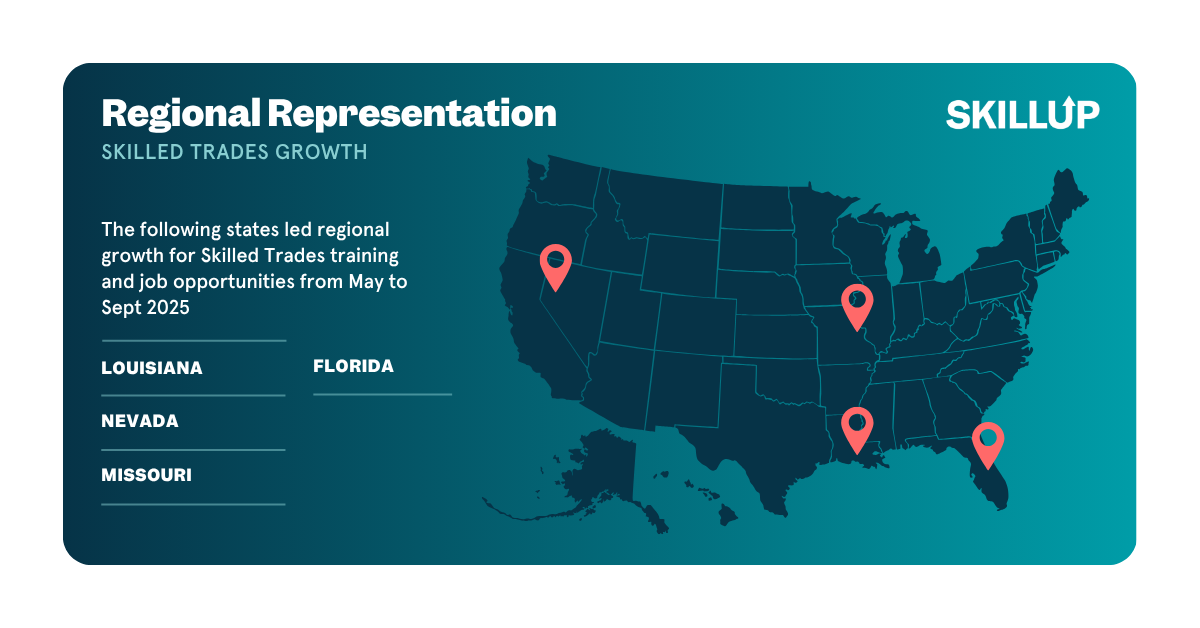
- Louisiana saw a 41% increase in Skilled Trades job postings across our catalog
- Northern Nevada saw a 28% increase
- Kansas City, MO, and Orlando, FL, two of our newest regional platforms, already show Skilled Trades training at 33% of total offerings (vs. the 29% average), with Skilled Trades jobs at 30% of total postings (vs. the 28% regional average)
What's Next
In 2026, SkillUp's new partnership with TradesForce will focus on clean energy jobs, many of which fall within the Skilled Trades. Our ongoing work with the Truist Foundation will also support continued job board development, including integration with apprentice.gov job listings.
For STARs who want hands-on work, community-rooted careers, and wages that reflect the value they bring, trades are a front-door opportunity. We'll keep working to make that door easier to find.
Want to follow SkillUp's platform data and partner insights? Sign up at skillup.org.


