Originally published on LinkedIn: June 18, 2025
The case for skilled trades has never been stronger. Electricians, plumbers, HVAC technicians, welders, and carpenters are some of the fastest-growing, best-compensated pathways available to workers without a four-year degree.
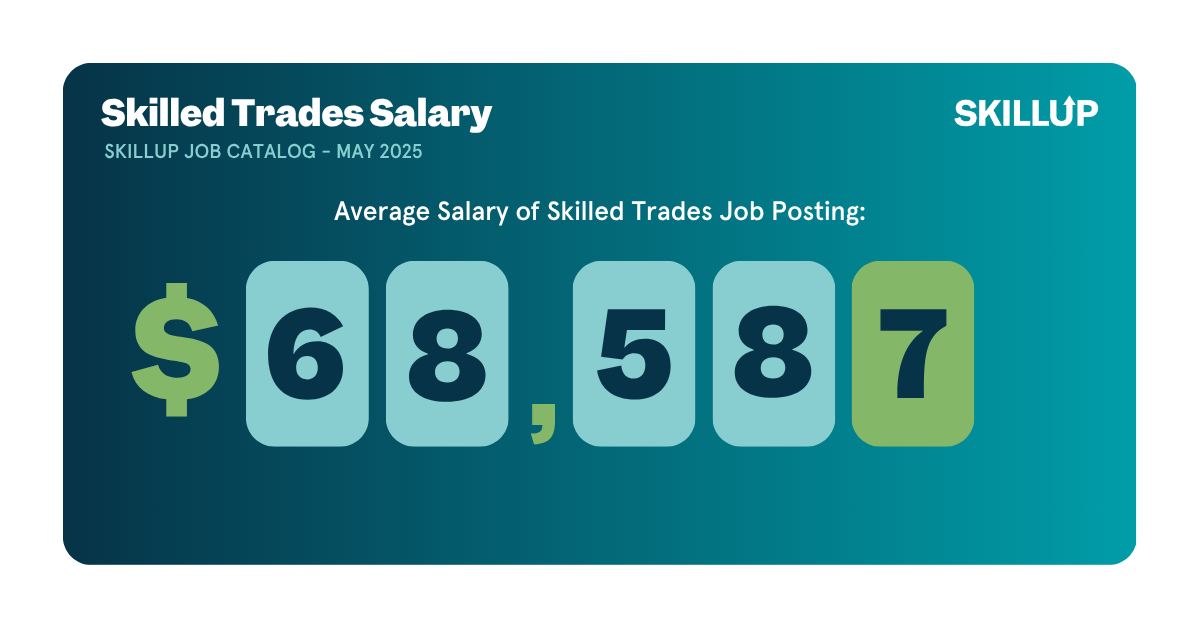
The Bureau of Labor Statistics projects electrician employment to grow 9% from 2024 to 2034 and generate roughly 81,000 openings per year. Meanwhile, median wages across the most in-demand trades range from $51,000 to nearly $63,000, with experienced specialists and business owners reaching six figures.
For workers navigating a path to financial stability without the weight of student debt, the trades represent an affordable, accelerated route to a living wage. That alignment is exactly why SkillUp, with the generous support of Truist Foundation, has made skilled trades a strategic priority on our platform.
Where the Trades Stand on SkillUp
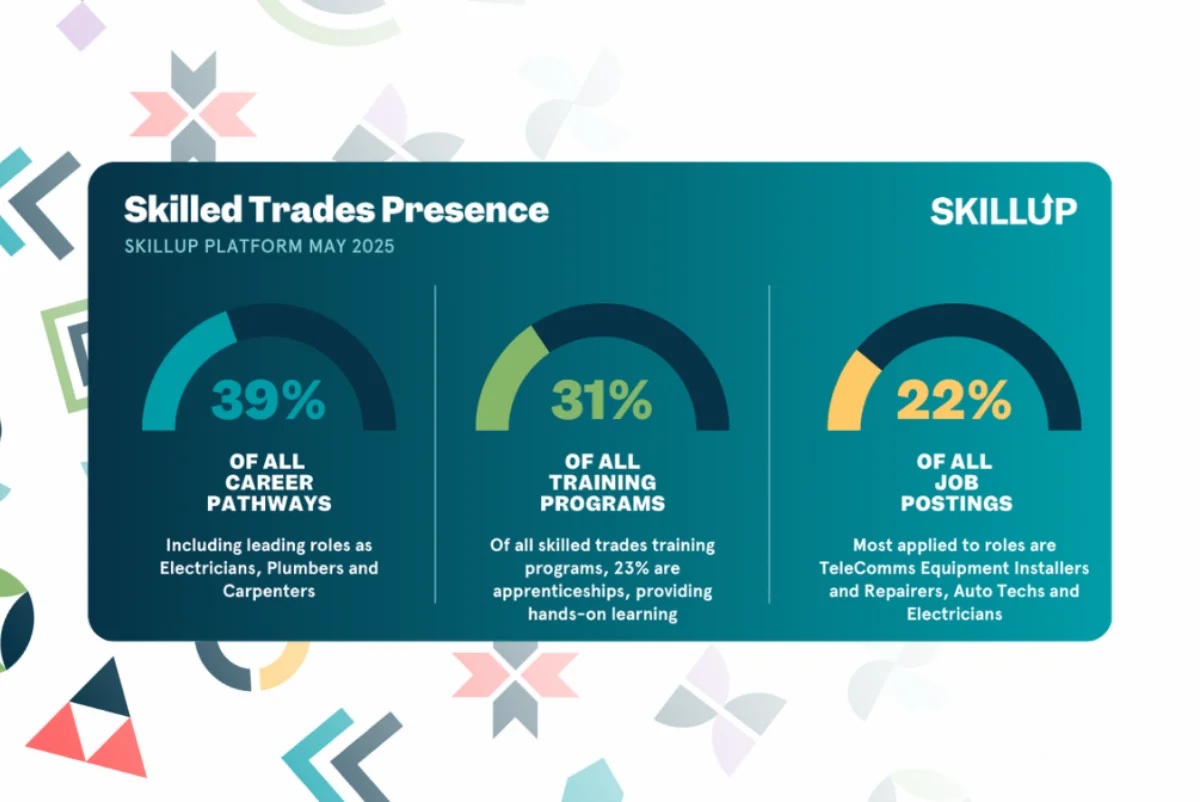
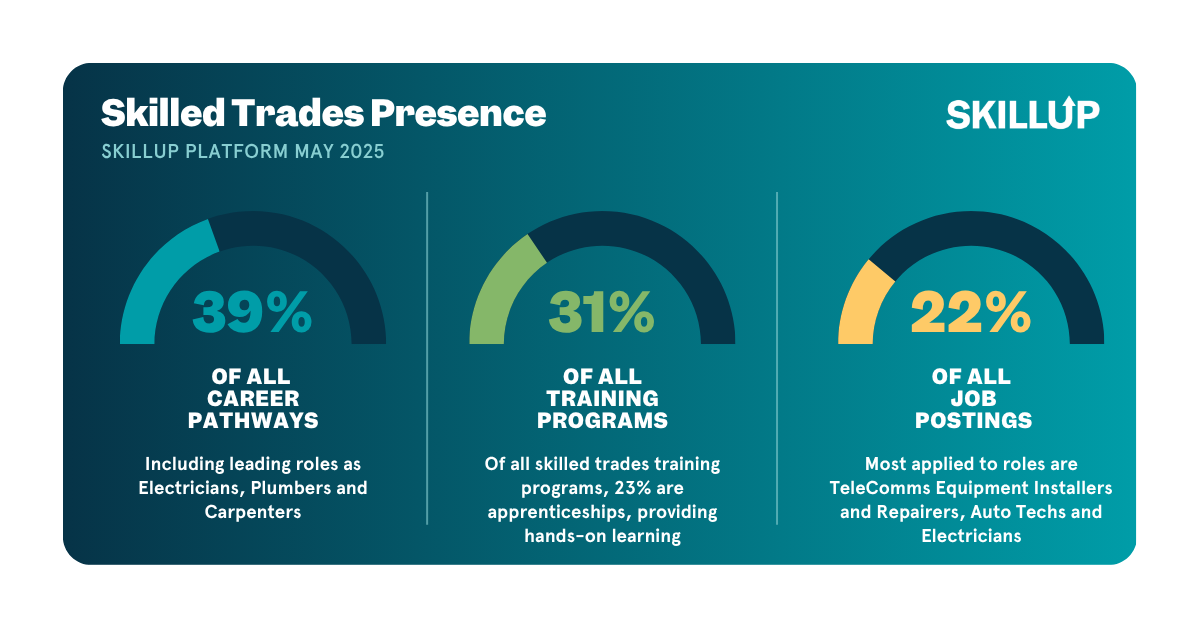
Skilled trades are one of the most substantial segments of what we offer to workers. Year-to-date through early 2025, the numbers speak for themselves:
- 36% of all career pathways on the platform are skilled trades
- 30% of training programs
- 21% of job postings
- 23% of skilled trades training programs are apprenticeships (pathways where workers earn income during training rather than taking on debt to get there)
Trades represent roughly one in three career options a worker encounters when they explore SkillUp.
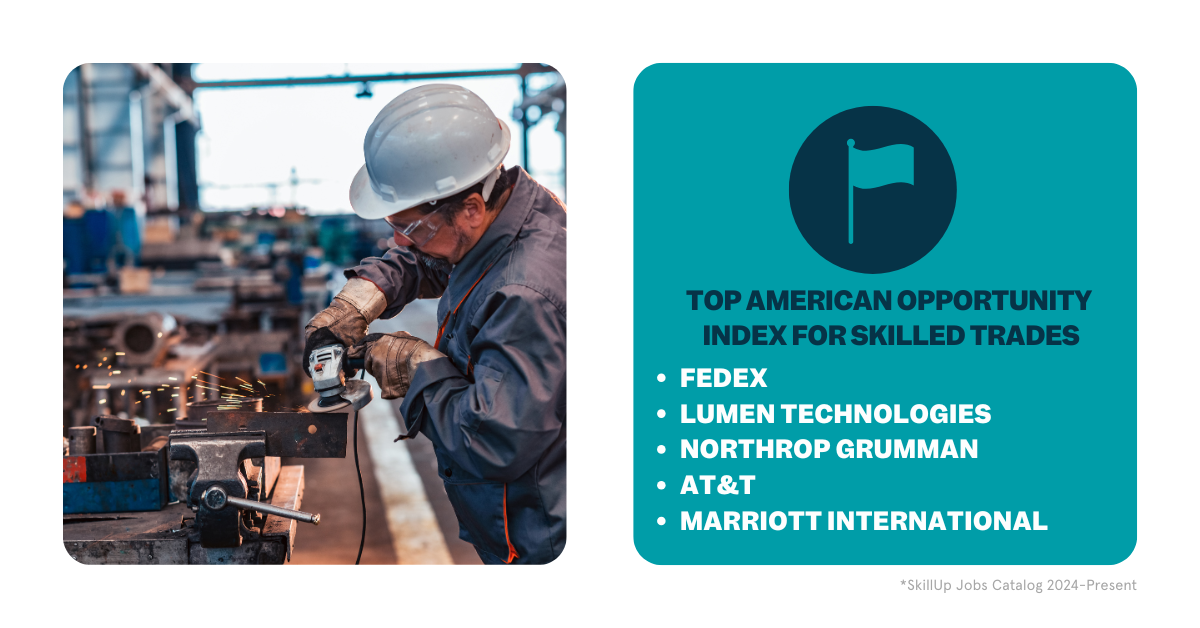
On the employer side, 28 companies from the American Opportunity Index have posted skilled trades roles on SkillUp's platform, including names like FedEx, AT&T, Lumen Technologies, Northrop Grumman, and Marriott International. Expanding this list of well-known companies offering no-degree-required jobs remains one of our top priorities.
What Workers Are Gravitating Toward
Within our training catalog, three trades lead in application volume:
- Electricians: 32% of total applications
- Carpenters: 25%
- Plumbers: 16%
Meanwhile, in our jobs catalog, the most applied-to trades shift slightly:
- Telecommunications Equipment Installers and Repairers: 21% of applications
- Automotive Service Technicians and Mechanics: 18%
- Electricians: 10%
This reflects the gap between what workers aspire to train for and what jobs are most visible and accessible in their region.
A few trades tell a more complicated story.
- HVAC programs make up 14% of the training catalog but attract only 7% of applications.
- Welding faces 13% of catalog share but 6% of applications.
Yet electricians alone are expected to see around 80,000 open positions in 2025, and HVAC and welding face nearly equivalent employer demand. The gap suggests an awareness and outreach problem, not a demand problem. It's exactly the kind of insight that shapes how SkillUp prioritizes content, partnerships, and regional strategy.
A Shifting Workforce Picture
Age & Generation
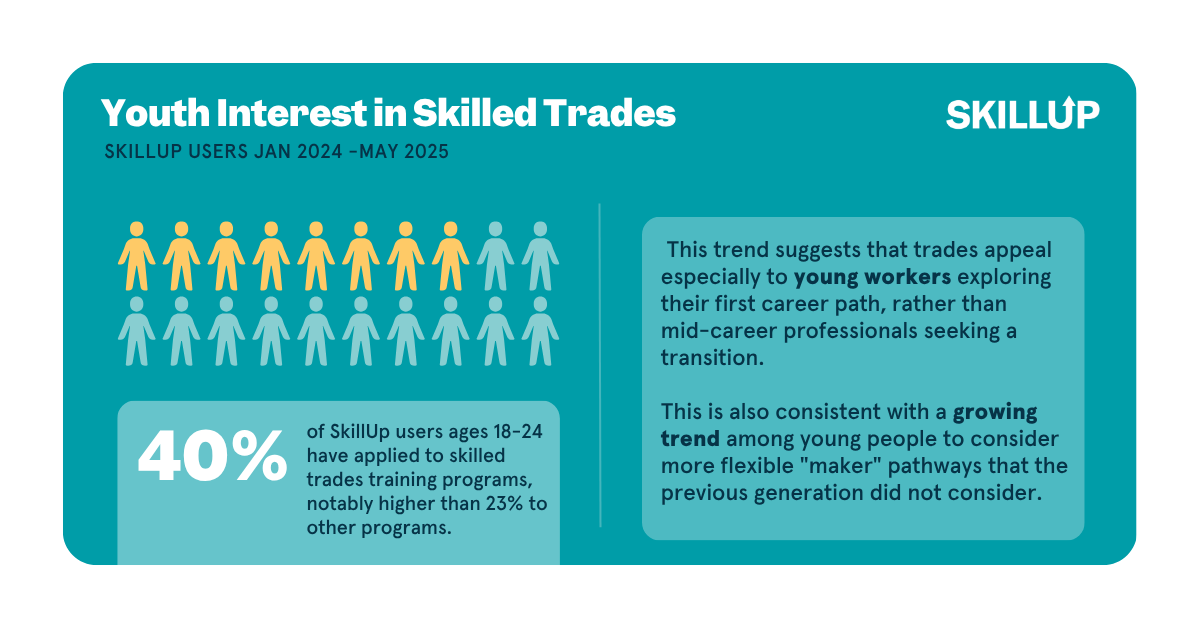
Forty percent of the skilled trades training applicants on SkillUp fall in the 18–24 age range, notably higher than the 23% we see across other industries. This tracks with a broader national shift. The Wall Street Journal dubbed Gen Z the "Toolbelt Generation" in 2024, noting a 23% increase in enrollment in trade programs and a 16% rise in enrollment at vocational-focused community colleges.
In the first quarter of 2024, 18- to 25-year-olds made up nearly 25% of all new hires in skilled trade industries, despite Gen Z comprising just 18% of the overall workforce. Young workers are not just open to the trades; they're showing up at the trade school door.
Gender
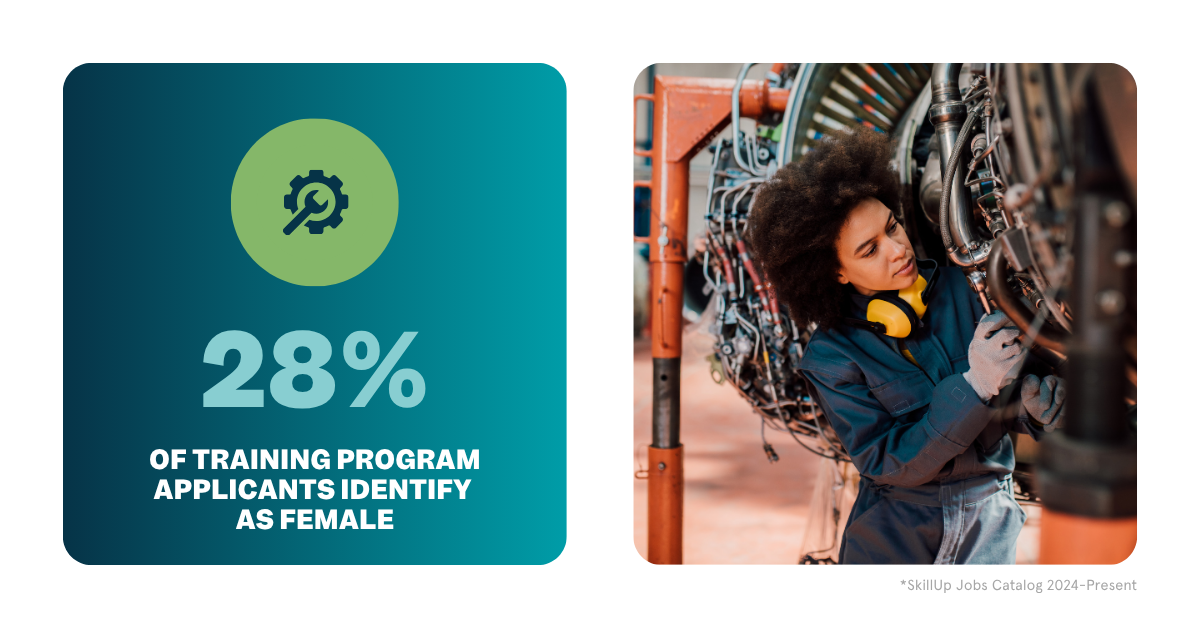
Gender representation remains a significant gap, with 70% of skilled trades training applicants on our platform identifying as male. That number reflects the broader industry reality. Women currently make up less than 5% of skilled trade workers overall, and while progress is being made, the pace has been slow.
Women in registered trade apprenticeship programs surged 214% between 2015 and 2024, reaching nearly 100,000, yet they still represent only about 15% of all active apprentices. Connecting more women to high-quality, accessible trades pathways is core to what "be about the worker" means in practice.
Regional Gaps To Watch
The data gets more textured at the regional level. Some areas are training-rich but job-light. Others have demand but no pipeline.
Madison, WI — training-rich, jobs-light Madison leads all regions in skilled trades training listings, with 44% of its catalog focused on trades. But job availability tells a different story, with the region ranking 36th nationally for open trades roles. Workers here have strong training access — the missing piece is employer visibility and job pipeline development.
Inland Empire, CA — jobs-rich, training-light The inverse of Madison. Inland Empire ranks first nationally for skilled trades job listings, with 24% of available roles in the trades. But it ranks 29th for training availability, which means significant employer demand exists with relatively few formal pathways to meet it. A strong candidate for targeted training investment.
West Michigan — well aligned One of the more balanced regional pictures in the data. West Michigan ranks 6th for training and 5th for jobs, reflecting a regional ecosystem where preparation and opportunity are working in the same direction.
Dayton, OH — well aligned Another strong alignment story. Dayton ranks 15th for training and 4th for jobs. It has a smaller training footprint than West Michigan, but job availability that significantly outpaces it.
These mismatches between where training is available and where jobs are posted point to the kind of gap that platform strategy, partner investment, and targeted outreach can help close. It also makes a strong case for continued regional expansion, particularly in markets where job demand is already high but workers lack a clear path to training.
What's Ahead
With Truist Foundation's support, SkillUp is investing in the visibility, accessibility, and awareness that trades careers deserve. We’re surfacing more apprenticeship pathways, building out regional training alignment, expanding employer engagement, and creating content that meets workers where they are in their decision-making.
The BLS expects about 650,000 new job openings every year in construction trades for the foreseeable future. Our job is to make sure the workers who stand to benefit most can find them.
Want to catch up on the latest numbers around Skilled Trades? Check out our Pulse Newsletter from Feb 2026.


