The original Text & Thrive case study explored how accessible, human-centered coaching helped workers navigate career uncertainty, stress, and transition in real time.
But one question continued to emerge:
What happens after the conversation ends?
As the partnership between SkillUp and Empower Work evolves, both organizations have become increasingly interested in understanding whether the impact of support extends beyond immediate moments of crisis or decision-making.
Could emotional support influence longer-term career persistence?
Could confidence and financial well-being be connected over time?
What role does human connection play in helping workers continue moving forward?
These questions helped shape a new phase of learning focused on longitudinal outcomes and worker well-being over time.
Looking Beyond Immediate Engagement
Traditional workforce metrics often focus on short-term outcomes:
- clicks
- applications
- registrations
- attendance
- placements
While these indicators matter, they may only capture part of the worker experience. For many workers, career navigation is deeply tied to stress, burnout, confidence, caregiving responsibilities, financial pressure, and uncertainty about the future.
This extended learning effort explored whether ongoing emotional and career support may also connect to:
- financial stability
- emotional resilience
- sustained career engagement
- confidence in decision-making
- persistence through setbacks
Early Themes Emerging
Emotional Well-Being and Financial Stability Are Closely Connected
The partnership’s continued exploration also reinforced that emotional and economic experiences are often intertwined.
Workers navigating financial instability frequently described:
- stress
- overwhelm
- isolation
- fear around career decisions
- difficulty planning long term
At the same time, users who reported stronger confidence, support, or clarity often demonstrated stronger engagement in career-related actions over time.
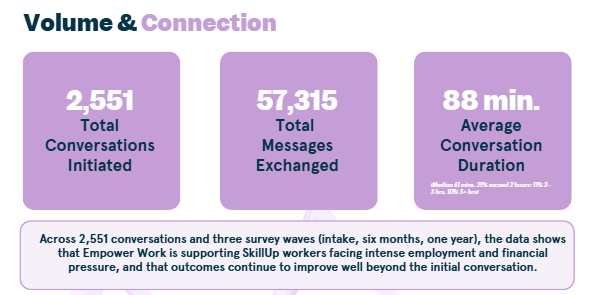
Additional longitudinal analysis is continuing to explore how emotional well-being and financial indicators may influence one another across a worker’s journey.
Exploring Longitudinal Income Trends
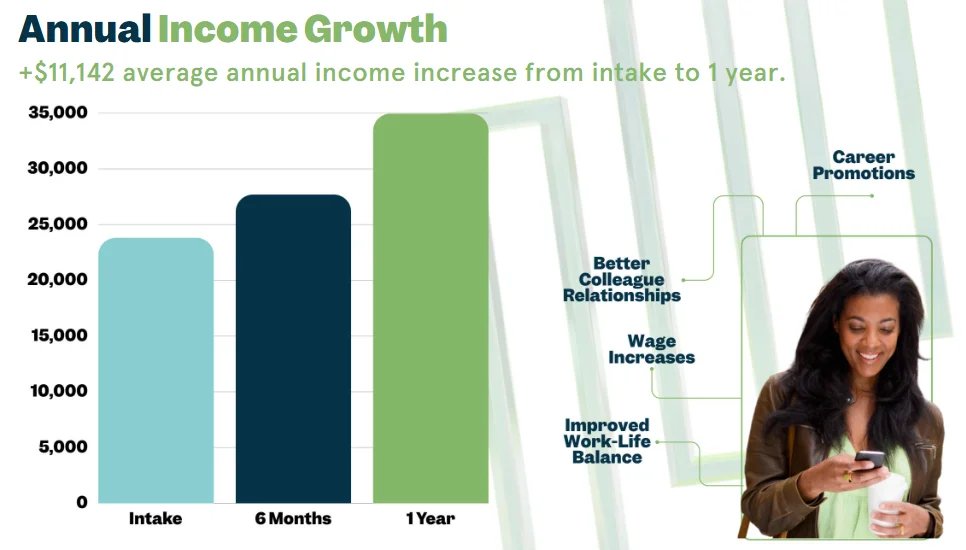
Another area of continued learning focused on understanding how workers’ financial experiences may evolve over time after receiving support.
While many workforce programs traditionally measure immediate outcomes — such as applications submitted or job placements secured — longer-term income progression can provide a deeper view into economic mobility and stability.
As part of this extended learning effort, the partnership began exploring questions such as:
- Do workers experience greater financial stability over time?
- Are users able to sustain employment or continue progressing in their careers?
- What patterns emerge months after initial engagement?
At the same time, emerging patterns suggest that ongoing support, clarity, and confidence may help some workers remain engaged in career pathways during periods of instability.
Rather than viewing career progress as a single outcome moment, this phase of learning approached economic mobility as a longer-term journey shaped by both practical and emotional factors over time.
Career Support Is Often Human Support
One of the clearest extended learnings was that workers rarely separate career challenges from the realities happening around them.
Job loss, burnout, caregiving responsibilities, workplace stress, financial pressure, and uncertainty often overlap.
As a result, many workers were not only seeking tactical advice; they were seeking reassurance, clarity, accountability, and human connection.
This reinforced the importance of designing workforce support systems that recognize the full context workers are navigating.
What We’re Continuing to Learn
The next phase of the partnership is focused on deepening understanding around:
- longitudinal income trends
- financial well-being over time
- emotional resilience
- continued engagement in career pathways
- retention and persistence behaviors
- long-term worker confidence and stability
While research is still ongoing, early findings suggest that accessible, human-centered support may play a meaningful role beyond immediate engagement metrics alone.
What’s Next?
The original Text & Thrive case study showed the power of meeting workers in moments of uncertainty.
These extended learnings are helping explore what may happen next. Not just whether workers engage with support in the moment, but whether that support contributes to longer-term stability, confidence, and career progress over time.
As workforce systems continue evolving, the partnership between SkillUp and Empower Work reflects a broader question facing the sector:
What does it look like to support not only career outcomes, but the human experience behind them?