
Public sector jobs offer stability, career growth, and a sense of community purpose. Yet for the 70 million American workers who are skilled through alternative routes (STARs), these roles often feel out of reach because the path to them remains opaque and intimidating.
Persistent vacancies have pestered state and local governments since the Great Recession, and those vacancies worsened during the pandemic. Unfortunately, many workers were locked out of those jobs because of degree requirements and convoluted application processes. Though the federal government issued an executive order to mandate increased skills- and competency-based hiring for government jobs to broaden their talent pool and create opportunities for STARs to gain employment in public sector roles, many public sector roles remain open. SkillUp and Opportunity@Work realized this was fertile ground to pilot a new approach, testing whether we could turn public sector curiosity into actual career outcomes for STARs.
Building Awareness Worked, But Then We Hit a Wall
We launched a multi-month campaign to test our theory of change: first we build awareness, then we shift perception, and ultimately we drive STARs to take action. On the SkillUp platform, we enhanced our job catalog to include hundreds of new roles, refreshed multiple times a week, and specifically spotlight those public sector jobs. We also created personalized recommendations on user dashboards, built a dedicated public sector industry hub, and deployed targeted email and SMS campaigns reaching tens of thousands of STARs.
The awareness building phase exceeded our expectations. Across all SkillUp’s regions, engagement with public sector catalog entries shifted dramatically toward working-age adults (18–34), the majority of whom identified as people of color. We saw concentrated regional activity in metropolitan hubs like New York, Dallas, and Atlanta. But we also successfully expanded visibility beyond city-level roles to include state government jobs across states such as Washington, Texas, and Massachusetts.
Police officers, water operators, firefighters, construction inspectors, and HR roles dominated the engagement with public sector jobs; exactly the on-ramp careers that offer STARs paths to economic opportunity. The number of users who created a SkillUp profile and indicated interest in these government roles soared. We had validated the interest in and demand for these roles.
But then the multi-month government shutdown happened. Though engagement with the public sector industry hub remained strong, job saves plummeted. SkillUp users were browsing opportunities, but they weren't applying to the roles.
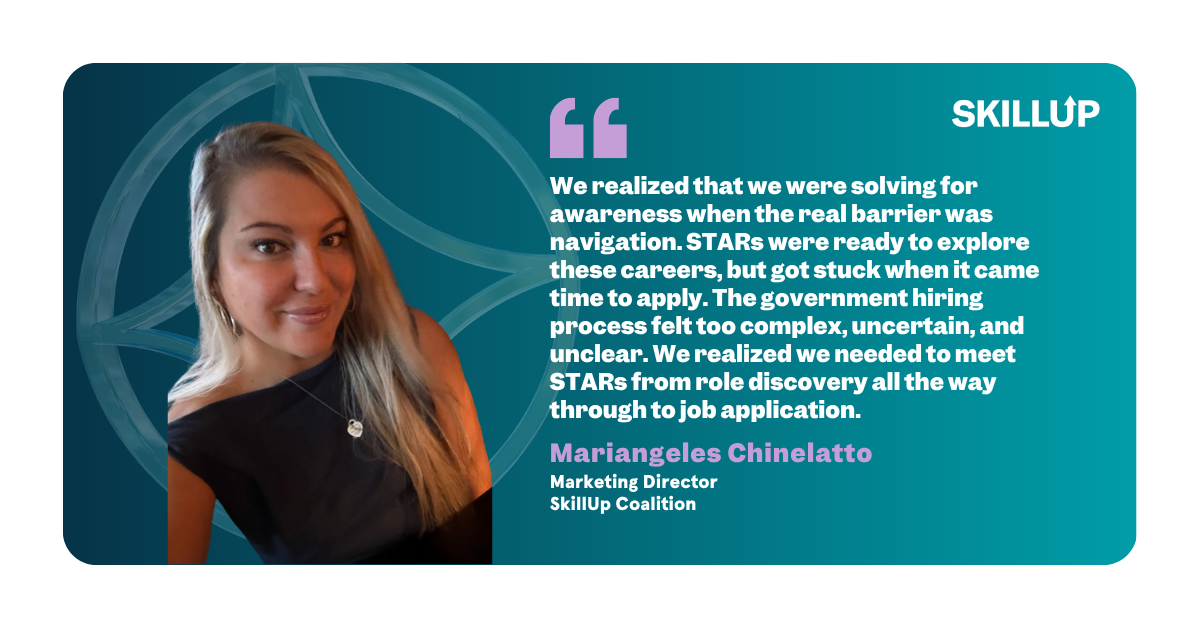
"We realized that we were solving for awareness when the real barrier was navigation," says Mariangeles Chinelatto, Marketing Director at SkillUp. "STARs were ready to explore these careers, but got stuck when it came time to apply. The government hiring process felt too complex, uncertain, and unclear. We realized we needed to meet STARs from role discovery all the way through to job application."
Surveys of SkillUp users who interacted with the public sector-specific catalogs confirmed this. While 78% of non-degree holding respondents expressed strong interest in public sector work, they showed significantly less confidence about whether they'd actually fit these roles. 70% agreed that the hiring process felt intimidating. And yet, 48% remained very or extremely interested despite the complexity, they just needed help navigating it.
The clearest takeaway from this pilot was that awareness campaigns alone won't close the public sector talent gap. More than only discovering which jobs exist, STARs need support to actually land them.
What We're Building Next
Together with Opportunity@Work, we have shifted our strategy from awareness building to career navigation support. That means building the mid-funnel resources STARs need to move from curiosity to confident action.
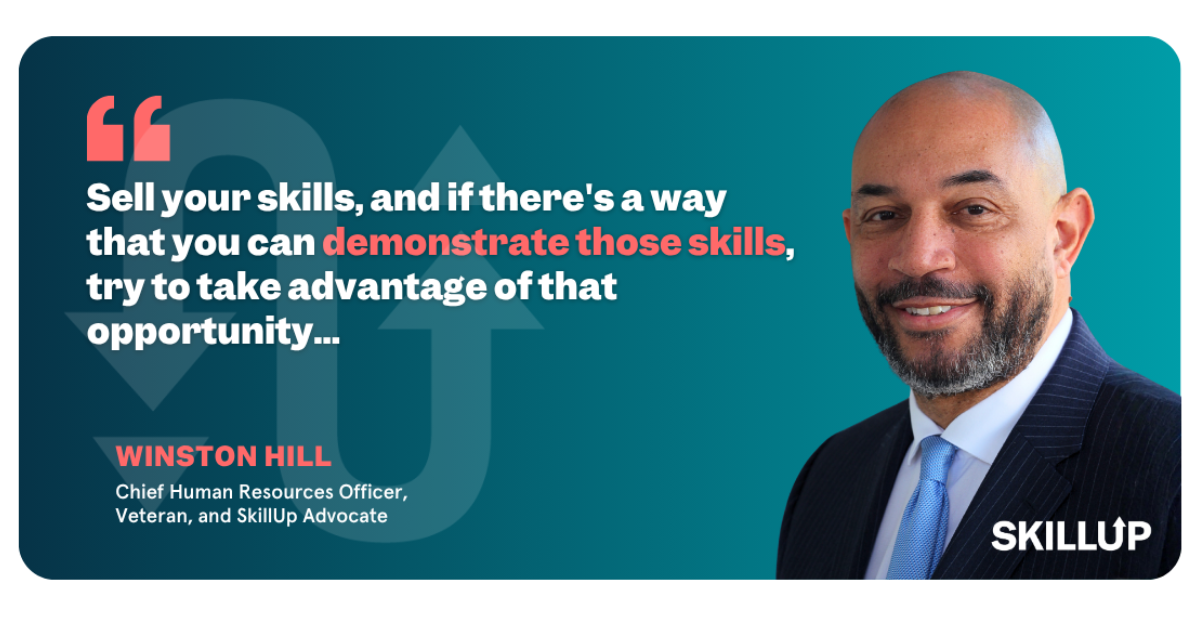
Together with Opportunity@Work, we've built a Public Sector Application Guide that demystifies government hiring timelines, expectations, and processes. In it, we include worker stories like Winston’s and Cherri’s, who have successfully navigated public sector pathways. Their experiences show what's possible and provide unfiltered insight into what the journey really entails. To nudge users who save jobs but hesitate to apply, we have implemented automated nurture campaigns to give them the reassurance and guidance needed to take that final step.
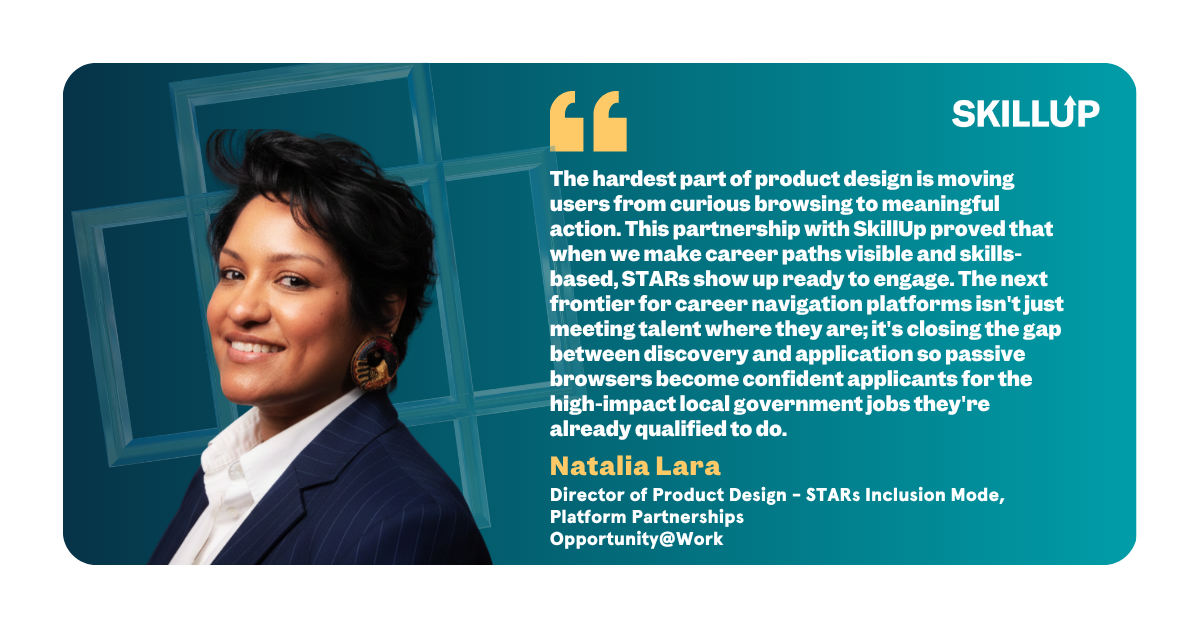
"The hardest part of product design is moving users from curious browsing to meaningful action," says Natalia Lara, Director of Product Design - STARs Inclusion Mode, Platform Partnerships at Opportunity@Work. "This partnership with SkillUp proved that when we make career paths visible and skills-based, STARs show up ready to engage. The next frontier for career navigation platforms isn't just meeting talent where they are; it's closing the gap between discovery and application so passive browsers become confident applicants for the high-impact local government jobs they're already qualified to do."
The public sector workforce challenge and the STAR opportunity crisis are two sides of a multi-sided issue. Solving the full picture requires more than creating stronger visibility, and relies on building deeper trust, demystifying application process complexity, and walking alongside workers while they move toward roles that bring both purpose and economic mobility.
As worker-first organizations, SkillUp and Opportunity@Work’s main focus is to track the impact of these new resources on user experience and, more importantly, outcomes. To take a deeper look at the public sector pilot, download the case study here.