Did you know you can go from zero experience to a paying job in under a year?
That's HVAC. No four-year degree, no decade of school. And because people will always pay to stay warm in winter and cool in summer, this is one of the more dependable trades you can step into.
This guide covers what it takes to get in: how quickly you can do it, the two routes most people take, the one certification you can't work without, and where the pay climbs once you're established.
What HVAC Techs Do All Day
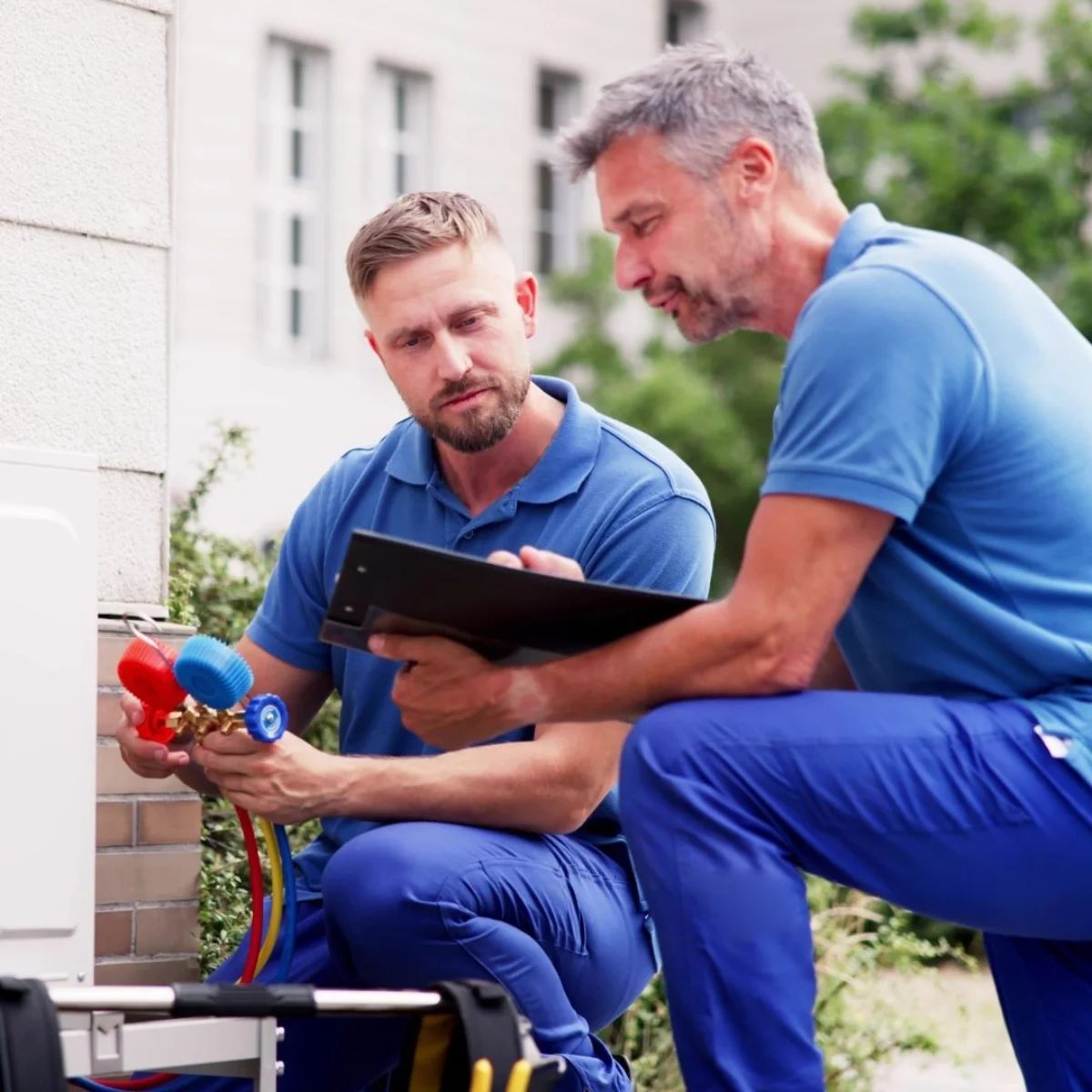
The job is part detective, part mechanic. A call comes in: a restaurant's walk-in cooler won't hold temperature, or a family's AC just quit in the middle of a heat wave.
You show up, track down what's wrong, and fix it. One day you're on a rooftop checking a commercial unit, and the next you're in a crawl space running ductwork or swapping a blower motor in someone's basement.
It's hands-on, it changes by the hour, and there's a clear before-and-after to the work. The room was hot; now it's cool. People who like chasing down a problem and walking away with it solved tend to do well in this field.
Unsure if that's you? SkillUp's Work Styles Quiz takes a few minutes and flags HVAC as a strong match for the Realistic and Investigative styles.
The schedule swings with the seasons. Summer and winter mean long days and on-call nights; spring and fall ease off. The work can put you in tight spaces, rooftop heat, and the odd-hour emergency. For a lot of techs, the pay and stability make the swings of the job an easy trade.
How Fast Can You Become an HVAC Tech?
Most programs and employers want a high school diploma or a GED. Past that, how soon you're earning depends on which of two roads you take.
One route trains you through a school program, then sends you into the field. The other puts you on a payroll from day one and trains you as you go.
Trade School or College
Time to start earning: After the program (6 to 24 months)
Upfront cost: ~$1,200 to $15,000 tuition
How you learn: Classroom and lab first, then the field
EPA 608 prep: Usually built into the program
Best if: You want structured training and a quick classroom-to-field jump
Apprenticeship
Time to start earning: Day one
Upfront cost: Little to none; you're paid to train
How you learn: On the job from day one, with classes alongside
EPA 608 prep: Often covered by the program or employer
Best if: You'd rather earn while you learn and skip tuition
Community college sits between these two options. Its one-to-two-year programs often cost less per year than trade school and add a credential plus broader coursework.
Whichever way you lean, compare HVAC programs on SkillUp by cost, length, and online versus in-person. The catalog showcases low-cost and free options that lead to livable-wage work.
Credentials, Apprenticeships & Earn and Learn
As you compare, check whether a program leads to a credential with a track record. Through SkillUp's partnership with the Burning Glass Institute, the Credential Value Index measures how much a credential moves workers' pay by drawing on millions of career records.
NCCER Core, the foundation many HVAC programs build on, is tied to wage gains of up to $15,700. Training that leads to credentials with that kind of evidence behind them tends to pay you back.
Drawn to the apprenticeship road? The U.S. Department of Labor's apprenticeship finder and SkillUp's training catalog both list openings, and roughly 90% of the apprenticeships on SkillUp cost nothing. New to how earn-and-learn works? Here's the rundown.
Don’t Forget About the EPA 608
No matter which road you take, the law won't let you work without one credential: the EPA 608 certification.
Under Section 608 of the Clean Air Act, anyone who handles refrigerants has to hold this certification. Without it, you can't legally buy or work with refrigerant, which means most of the job is gone.
There are four levels, sorted by the equipment you'll touch:
- Type I: Small appliances like household refrigerators and window units
- Type II: High-pressure systems like central air conditioning and commercial refrigeration
- Type III: Low-pressure systems like industrial chillers
- Universal: All three, for the most freedom on the job
You test through an EPA-approved provider, and you don't need experience or a license to sit for it. Most school programs fold the prep and the exam into tuition. If yours doesn't, a Universal sitting runs around $100.
It never expires, either. Once you pass the exam, the credential is yours for good, even if you step away from the trade for a few years.
How Much Does an HVAC Technician Make?
HVAC pays solidly out of the gate and climbs from there. The Bureau of Labor Statistics puts the median wage at $59,810 as of May 2024, with the field projected to grow 8% through 2034 and about 40,100 openings a year.
Starting pay sits lower while you learn, often around $20 an hour. But after that, the biggest pay jump usually comes from specializing in one kind of system. Residential service is steady work. Commercial refrigeration, industrial chillers, and data center cooling are where the higher paychecks live, since fewer techs can do that work and the systems are more complex.
Credentials help, too. NATE certification, from North American Technician Excellence, isn't mandatory, but it signals tested skill to employers and customers and can open better-paying work.
How to Get Your HVAC License
Licensing hinges on where you live. Some states license HVAC techs statewide, some leave it to cities or counties, and a few don't require a license to work under a contractor at all.
Where a license applies, you'll generally need documented experience hours, your EPA 608, and a passing exam on codes and safety. A contractor's license, the one that lets you run your own shop, adds insurance and bonding on top.
Your state's licensing board is the place to get the exact list before you start applying.
Start Where You Are
You don't need the whole path mapped out to take a first step.
- Not sure HVAC is your trade yet? The Work Styles Quiz is a five-minute gut check.
- Closer to ready? Browse HVAC programs to see what training near you costs and how long it will take, or scan open HVAC roles that don't need a degree to see what's hiring.
- Want the bigger picture of the job first? The HVAC technician career page lays out the day-to-day, pay, and outlook in one place.
Then create a free SkillUp profile to save programs, set a goal, and track your progress, so the next move stays in front of you instead of starting over each time you log in.
The trade rewards people who start. A seat on a repair truck could be closer than you think.
FAQs
Is the EPA 608 exam hard?
It's manageable, especially with prep. The Type I portion is open book, and most people pass after working through a study guide or a program that builds the test in. It centers on safe refrigerant handling and the rules around it, not advanced math.
Can you do HVAC training online?
Partly. A lot of the coursework and the EPA 608 exam can be done online through approved providers. The hands-on side still calls for lab time or on-the-job practice, so most online programs pair virtual lessons with in-person work.
How much do HVAC techs make starting out?
Entry pay often lands around $20 an hour while you build skills. The national median is $59,810, and techs who move into commercial refrigeration or other high-demand work climb well past that.
Is HVAC a good long-term career?
Yes. Every building needs heating and cooling, the work can't be shipped overseas, and there's room to grow into higher-paying niches or run your own shop down the line.