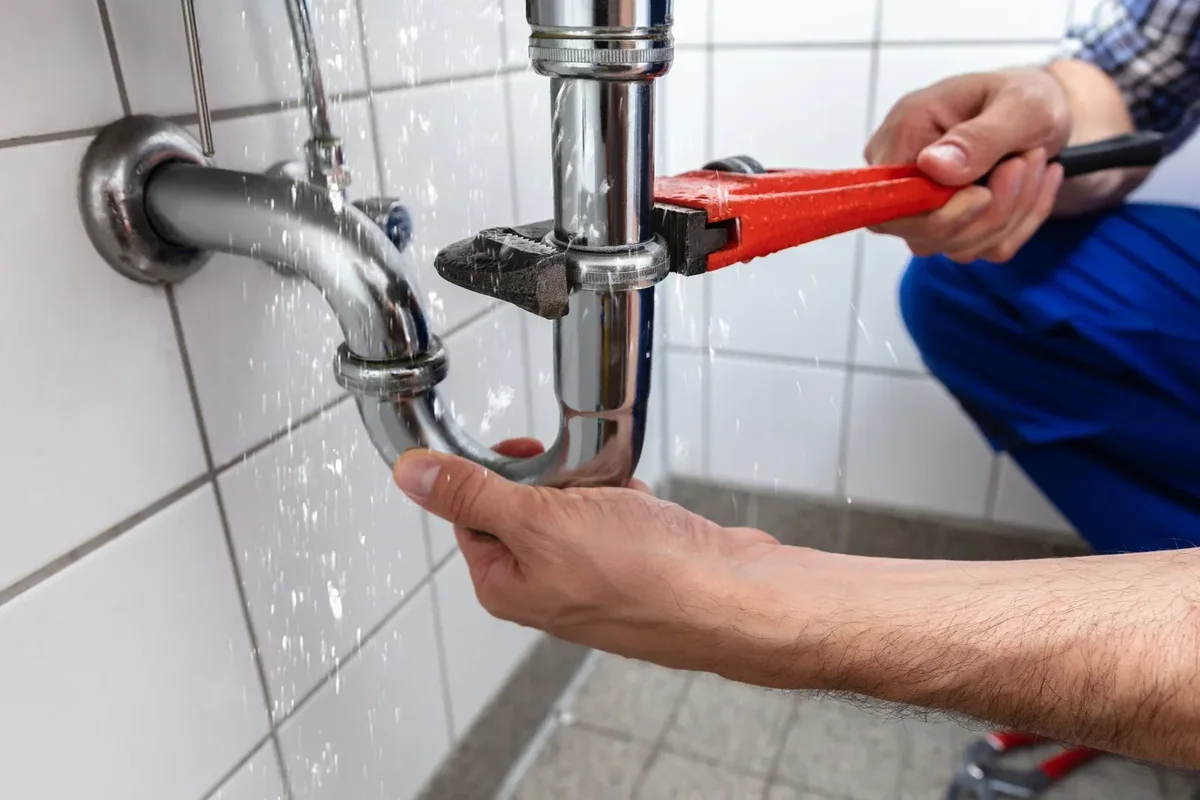
Pipes burst and drains clog no matter what the economy's doing, and no app or overseas worker can fix them. That's part of why plumbing pays well and keeps paying more as you climb.
You start as a paid apprentice, earn a journeyman license to work on your own, and can reach master plumber, the rung that lets you pull permits and run your own business.
Each step up means more independence and a bigger paycheck. This guide lays out the climb: how to get on the ladder, what each level lets you do, what it pays, and how to reach the next one.
What Do Plumbers Do?
Plumbing is physical, hands-on work. You'll lift heavy fixtures, work in crawl spaces and trenches, and stay on your feet most of the day. The work spans homes, restaurants, hospitals, and job sites, so no two weeks look quite the same. Some calls are emergencies, so the occasional night or weekend comes with the territory.
In exchange, you get steady demand, strong pay, and skills nobody can take from you. People who like solving problems with their hands and seeing a job through tend to take to it fast.
The numbers back that up. The Bureau of Labor Statistics puts the median plumber wage at $62,970 as of May 2024, and the field adds roughly 44,000 openings a year as older workers retire. Growth is a steady 4% through 2034, but those retirements are what keep the door wide open.
Not sure if it's your kind of work? SkillUp's Work Styles Quiz flags plumbing as a match for the Realistic and Investigative styles, and it takes about five minutes.
Plumbing isn't one single job, either. It branches into pipefitting and steamfitting, which handle industrial and high-pressure systems and can pay even more.
What Does the Plumber Journey Look Like?
Almost everyone follows the same three-rung climb, though the exact hours and exams shift by state. The climb is gradual, but each rung comes with a raise and more control over your work.
Rung 1: Apprentice
What You Can Do: Train and work under a licensed plumber
Typical Pay: Paid from day one, rising yearly
How to Reach It: High school diploma or GED, then join an apprenticeship
Every plumber starts here. The entry bar is modest: a high school diploma or GED (a year of algebra helps with pipe sizing), age 18, and a driver's license, since you'll drive to job sites daily.
From there, you land an apprenticeship in one of a few ways. You can 1) join a union program through the United Association, 2) sign on with a non-union contractor through groups like PHCC or ABC, or 3) start at a trade school or community college and apprentice after.
Union apprentices often earn more and pick up benefits like health insurance and a pension in exchange for dues. Non-union programs can be easier to join and more flexible. Both finish at the same license, so the call comes down to what's open near you.
Whichever route you take, an apprenticeship pays from day one and takes about four to five years of on-the-job hours mixed with classroom instruction. You're earning a paycheck the whole time rather than paying tuition for the privilege of learning.
Early on, you'll mostly assist: hauling materials, learning the tools, and watching how a licensed plumber reads a job. The harder, better-paid work comes as your hours add up.
As you look at programs, compare plumbing training on SkillUp by cost, length, and format, and check whether each leads to a credential with a track record. The four-level NCCER Plumbing credential is a common, stackable foundation, and SkillUp's partnership with the Burning Glass Institute lets you see how credentials like it perform through the Credential Value Index.
To find openings, try the U.S. Department of Labor apprenticeship finder and SkillUp's training catalog, where roughly 90% of listed apprenticeships are free. Curious how earn-and-learn works? Here's a primer.
Rung 2: Journeyman
What You Can Do: Work on your own, take on bigger jobs
Typical Pay: Around $25/hr on average, more in cities
How to Reach It: 4 to 5 years of apprentice hours, then pass the state exam
After you complete your apprenticeship hours and pass your state's journeyman exam, you earn the license to work independently.
That means no more direct supervision on routine work, the freedom to take on bigger jobs, and a clear jump in pay. The exam covers local codes, safety, and hands-on skills like reading plans and sizing pipe.
Many journeymen also start supervising an apprentice of their own, which is the first taste of leading a crew.
Most states ask you to renew the license every one to three years and keep up with code changes, so a little ongoing learning comes with the title.
Rung 3: Master Plumber
What You Can Do: Pull permits, run a business, train others
Typical Pay: Around $30/hr and up; top earners own shops
How to Reach It: 2 to 5 more years as a journeyman, then pass the master exam
Master is the top rung, and it's where plumbing turns into a business. Reaching it usually takes two to five more years as a licensed journeyman, plus an exam covering advanced codes and business rules.
A master plumber can pull permits, sign off on work, supervise crews, and own a shop. This is the level where the biggest paychecks live, especially for those who run their own company. Owning a shop lifts the ceiling further, since you're billing for a crew's work, not just your own hours.
Running a shop is as much business as trade, though, and involves estimating jobs, hiring, and keeping customers happy on top of the plumbing. At this rung, the pay changes, but so does the work itself.
You don't have to reach the master level to make a good living. Plenty of plumbers build long careers as journeymen, especially if they don’t have a desire to become business owners. But the rung is there if you'd rather own the ladder than keep climbing someone else's.
How to Get a Plumbing License
Your state sets plumbing licensing, and sometimes your city, so the exact hours and exams you’ll need will differ from the ranges above.
Before you start logging hours, look up your state's plumbing board so you know which boxes you're checking. It saves you from learning too late that an hour or a class didn't count.
Start Climbing
You don't need to see all the way to master to take a first step. The first rung is the only one you have to reach today.
Weighing whether plumbing fits? Start with the Work Styles Quiz. Ready to look at training? Browse plumbing programs by cost and length, or scan open plumbing jobs that don't ask for a degree. Want the full picture of the trade first? The plumber career page lays out the day-to-day and pay in one place.
Then create a free SkillUp profile to save programs, set a goal, and track your hours and milestones as you climb.
The ladder's right there. The only step that matters is the first one.
FAQs
How long does it take to become a plumber?
Reaching journeyman usually takes four to five years of an apprenticeship. The master plumber rank adds two to five more years. The upside is you're paid the whole way, so you're not waiting years to earn.
Do you need a degree to become a plumber?
No four-year degree needed. You'll want a high school diploma or GED, a completed apprenticeship, and your state license. Trade school is optional and can give you a head start.
How much do plumbers make?
The national median is $62,970. Journeymen average around $25 an hour, and master plumbers and shop owners climb well past that, especially in busy metro areas.
Can plumbers make six figures?
Yes, though not at entry level. Master plumbers, shop owners, and plumbers in high-demand metro areas can clear six figures. The path to six figures goes through the journeyman and master licenses.