For Job Seekers
For Career Exploring
Become a Partner
Search
Behind every doctor’s diagnosis or insurance claim is a set of organized, accurate records. Medical records specialists help make that possible. If you’re tech-savvy, enjoy structure, and prefer behind-the-scenes work in healthcare, this could be your path in.

Medical records specialists are responsible for organizing, coding, and maintaining patient data across healthcare systems. They play a key role in making sure providers, billing departments, and insurance companies have accurate records and that those records stay secure and confidential.
You might see this role listed as medical coder, health information technician, or records coordinator. The job is part admin, part tech, and fully essential to how healthcare runs behind the scenes.
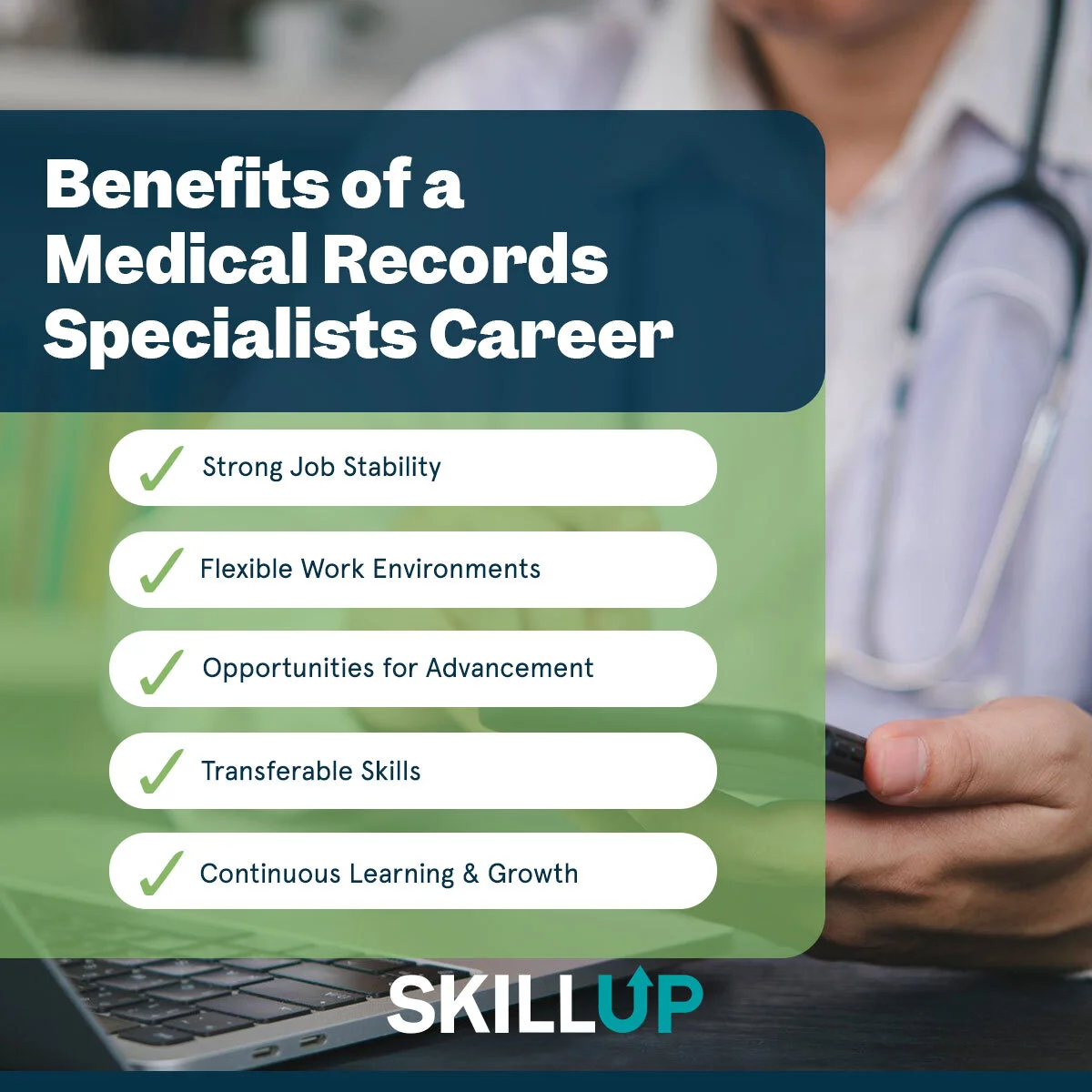
You don’t need a degree to start in this role, but you will need training in medical coding systems, privacy laws, and healthcare documentation. Most people get started through short-term certificate programs or community college courses.
Here’s how to begin:
Earn a high school diploma or GED: This is the basic requirement for most training programs and jobs.
Complete a medical coding or health information program: These can often be completed in under a year, and many are offered online.
Prepare for certification: Most employers prefer or require certification, especially for roles that include coding or insurance billing.
Apply for entry-level positions: Look for roles like records clerk, coder, or EHR technician to get your foot in the door.

No. Most entry-level roles require a postsecondary certificate and a professional certification rather than a two- or four-year degree.
No. This is an administrative and data-focused role. You’ll work behind the scenes to organize and protect patient information.
Common tools include electronic health records (EHR) systems like Epic or Cerner, along with coding databases and claims processing tools.
Yes. You could move into supervisory roles, health data analytics, compliance, or even transition into healthcare IT or auditing with additional training.