For Job Seekers
For Career Exploring
Become a Partner
Search
If you're good with numbers, enjoy helping people, and don’t mind a bit of paperwork, tax prep could be a rewarding (and flexible) career path. It’s one of the few roles where short-term training can lead to consistent, seasonal, or full-time income—no degree required.

Tax preparers help individuals and businesses file their taxes accurately and on time. That includes collecting financial records, reviewing income and deductions, and submitting forms to the IRS or state agencies. Some work year-round, while others focus on the busy tax season (January through April).
You might see job titles like tax professional, tax examiner, income tax preparer, enrolled agent, or tax associate. The work can range from basic returns to more complex filings for corporations or self-employed clients.
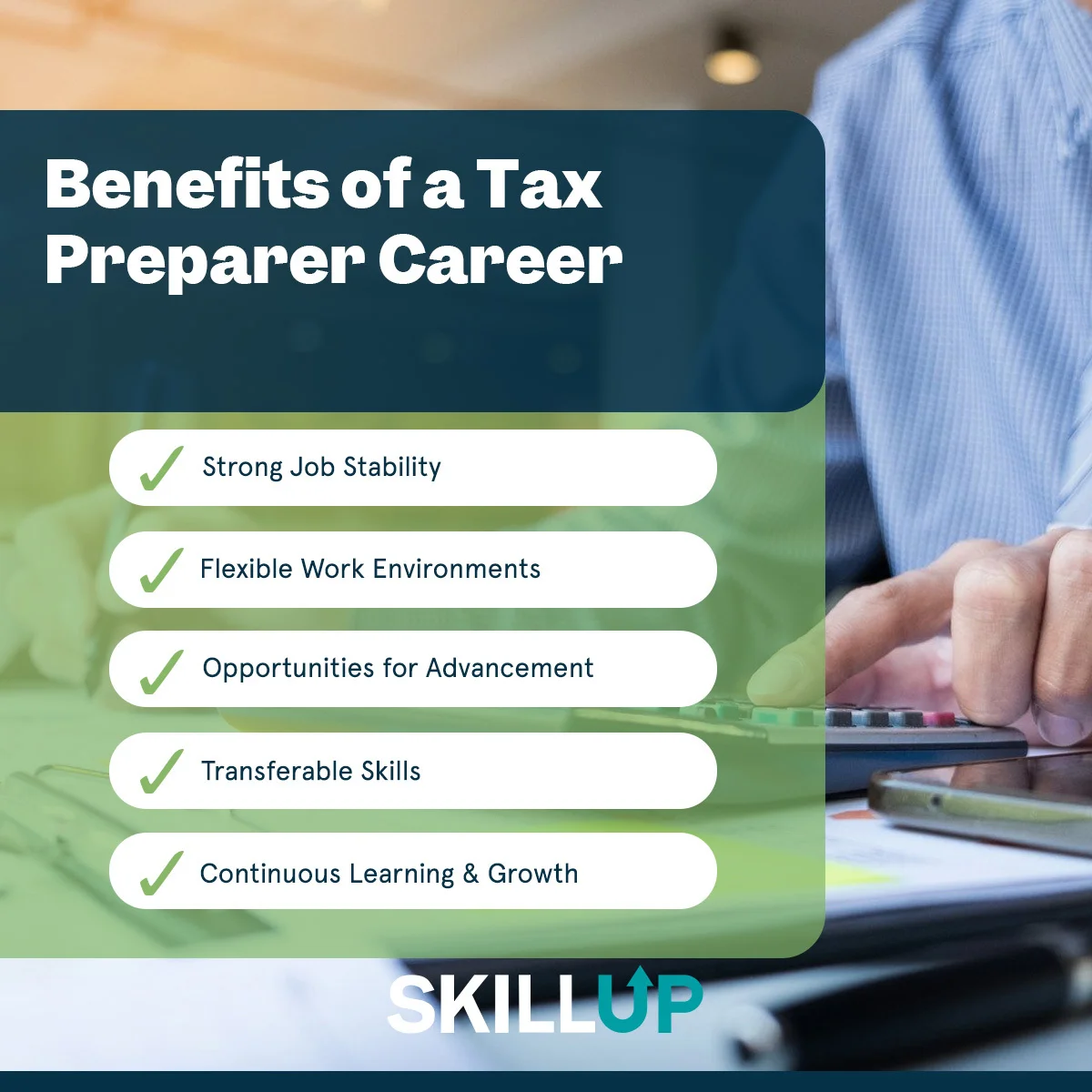
Many tax preparers start with short-term training, then build experience by working with individuals, small businesses, or tax prep firms. Here's a typical path:
Earn a high school diploma or GED: This is the basic requirement for most training programs and employers.
Complete a tax preparer course: Many are available online and cover tax law, filing basics, and IRS forms. Some can be completed in just a few weeks.
Apply for a Preparer Tax Identification Number (PTIN): You’ll need this IRS-issued number to legally prepare returns for others.
Pursue certification (optional but helpful): Becoming an Enrolled Agent (EA) gives you more flexibility and earning power, especially if you want to grow your own practice or work with more complex returns.

No. You can get started with a high school diploma, a PTIN, and basic training in tax preparation.
Many preparers work full-time during tax season (Jan–Apr), but others stay busy year-round helping with extensions, audits, business filings, or bookkeeping.
Common software includes TurboTax Pro, Drake, TaxSlayer Pro, and IRS e-file systems. You’ll also need to be comfortable with spreadsheets and basic math.
Yes. After gaining experience and completing the necessary registration/certification, many tax preparers open their own seasonal businesses.