For Job Seekers
For Career Exploring
Become a Partner
Search
Insurance agents help people protect the things that matter: homes, cars, businesses, health, and more. If you're a strong communicator, comfortable with numbers, and like solving problems, this role can offer both flexibility and long-term growth without a four-year degree.

Insurance agents help clients understand their coverage options and guide them through the process of purchasing or renewing policies. Some focus on sales, while others handle customer support, claims, or policy updates.
You might see job titles like: Insurance Sales Agent, Customer Service Representative, Claims Advisor, Insurance Producer, Licensed Insurance Agent, or Insurance Account Representative.
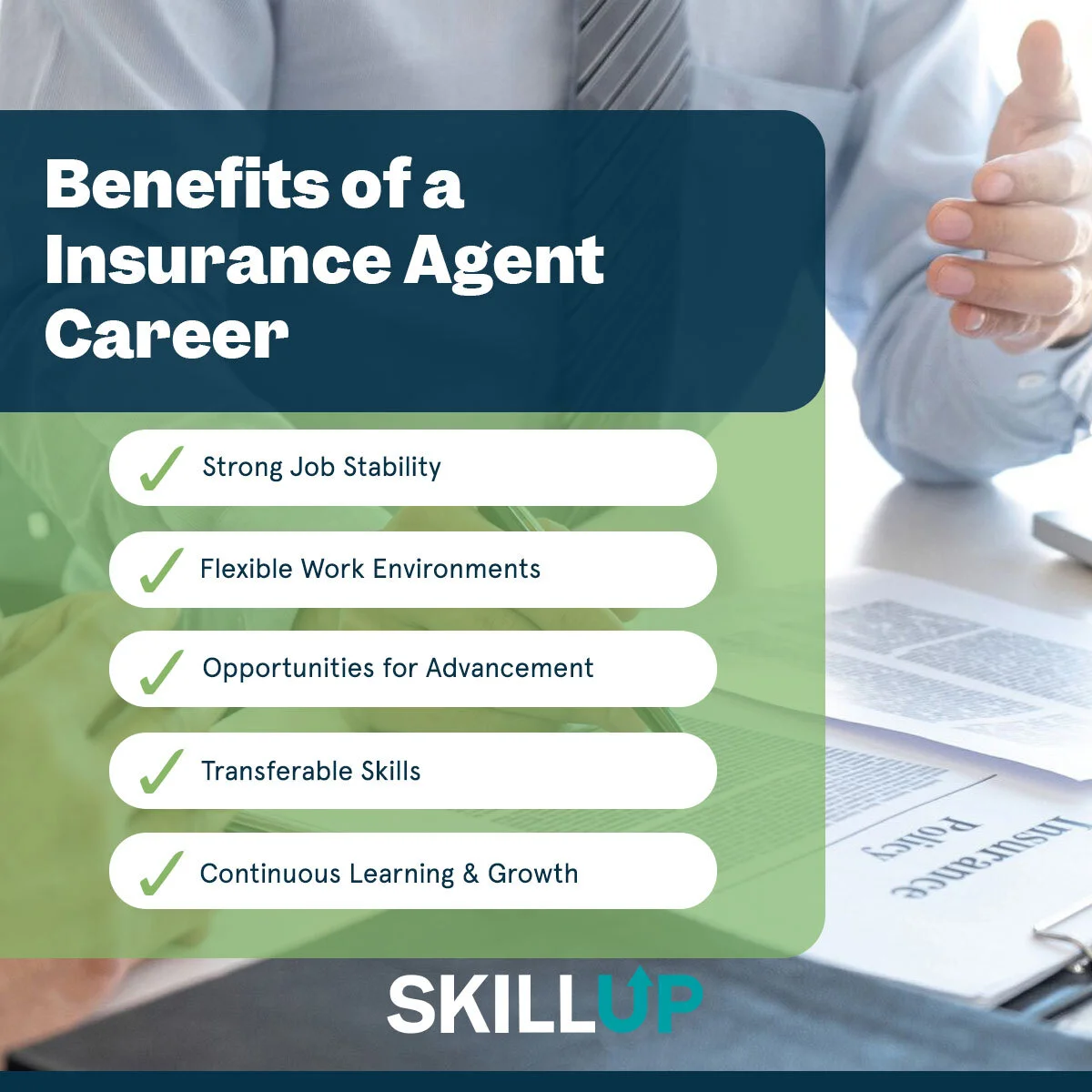
Training is typically short, and many companies will hire and license you on the job. The key is building trust, product knowledge, and strong communication skills.
Start with a high school diploma or GED: This is all you need to qualify for most entry-level roles.
Choose a type of insurance to focus on: Common options include property & casualty (home, auto), life, or health insurance.
Complete pre-licensing education (if required): Most states require a short course (usually 20–40 hours) before you can take the licensing exam.
Apply for entry-level roles: Many small businesses, startups, or accounting firms hire junior bookkeepers and train them on the job.
Apply for entry-level jobs at insurance agencies or carriers: Many companies provide training, especially for customer-facing roles.

No. Most agents enter the field with a high school diploma and complete licensing on the job or through a short course.
It can be. Many agents focus on sales, while others work in customer service or policy support. It depends on the company and role.
Auto, homeowners, renters, life, health, business, or commercial liability—just to name a few. Each requires its own license.
Typically 2–6 weeks, depending on your state’s pre-licensing and testing process.
Yes. After gaining experience, many agents go on to start their own agency or work as independent brokers.
Definitely. You can move into team leadership, underwriting, risk consulting, or open your own agency.