For Job Seekers
For Career Exploring
Become a Partner
Search
Human Resources (HR) is where people and policy meet. HR specialists help companies find, hire, and support employees, from writing job postings to resolving workplace issues. If you’re organized, communicative, and interested in helping people succeed at work, this could be a strong fit.

HR specialists focus on one part of the employee experience—usually recruiting, hiring, or handling benefits. You’ll find them screening job applications, explaining benefits packages, conducting onboarding, and working behind the scenes to support a healthy workplace.
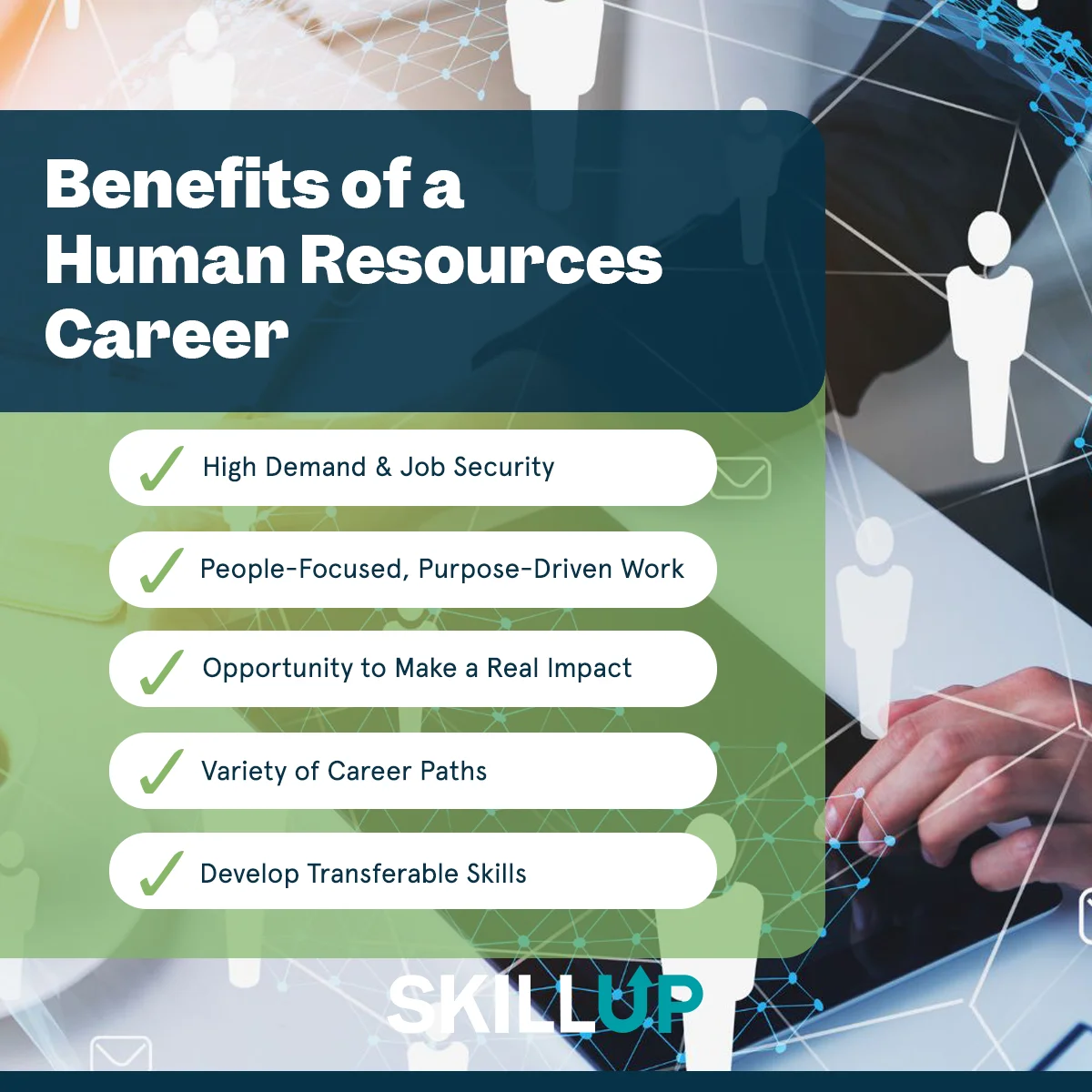
You don’t need a degree to work in HR, especially at the assistant or coordinator level. Employers often hire based on transferable skills like communication, organization, and attention to detail.
Here’s how you can get started:
Start with a high school diploma or GED: This is the minimum for most entry-level HR roles.
Build soft skills: Clear communication, empathy, time management, and confidentiality all matter in HR work.
Learn the basics of HR and recruiting: Look for free or affordable online courses in HR fundamentals, workplace law, or recruiting.
Keep learning: IT changes fast. Building your skills over time (through certifications or self-study) can lead to better roles and higher pay.
Optional: Earn a credential like the aPHR: Certifications can help you stand out, especially if you’re switching careers or don’t have formal HR experience.

Yes! HR roles are people-focused, and many specialists love the mix of administrative work and relationship-building.
Not necessarily. Many people start in support roles (like HR assistant or coordinator) and work their way up with experience and certifications.
Yes. Many HR tasks—especially recruiting, benefits, and compliance—can be done remotely. Some roles may require occasional in-office time.
You can grow into roles like HR Manager, Benefits Manager, or even Director of People Operations. With experience, you might also specialize in areas like compensation, training, or compliance.