For Job Seekers
For Career Exploring
Become a Partner
Search
Claims adjusters are the people who investigate what went wrong and help make it right. Whether it’s a fender bender, a house fire, or a workplace injury, adjusters evaluate insurance claims and work with policyholders, legal teams, and service providers to get the details straight.

Claims adjusters evaluate insurance claims to determine how much should be paid, how quickly, and to whom. Depending on the situation, they may inspect damaged property, review police or medical reports, speak with claimants, or consult with legal teams.
You might see roles listed as claims examiner, field adjuster, claims analyst, or litigation representative, but they all play a part in making sure claims are handled fairly and accurately.
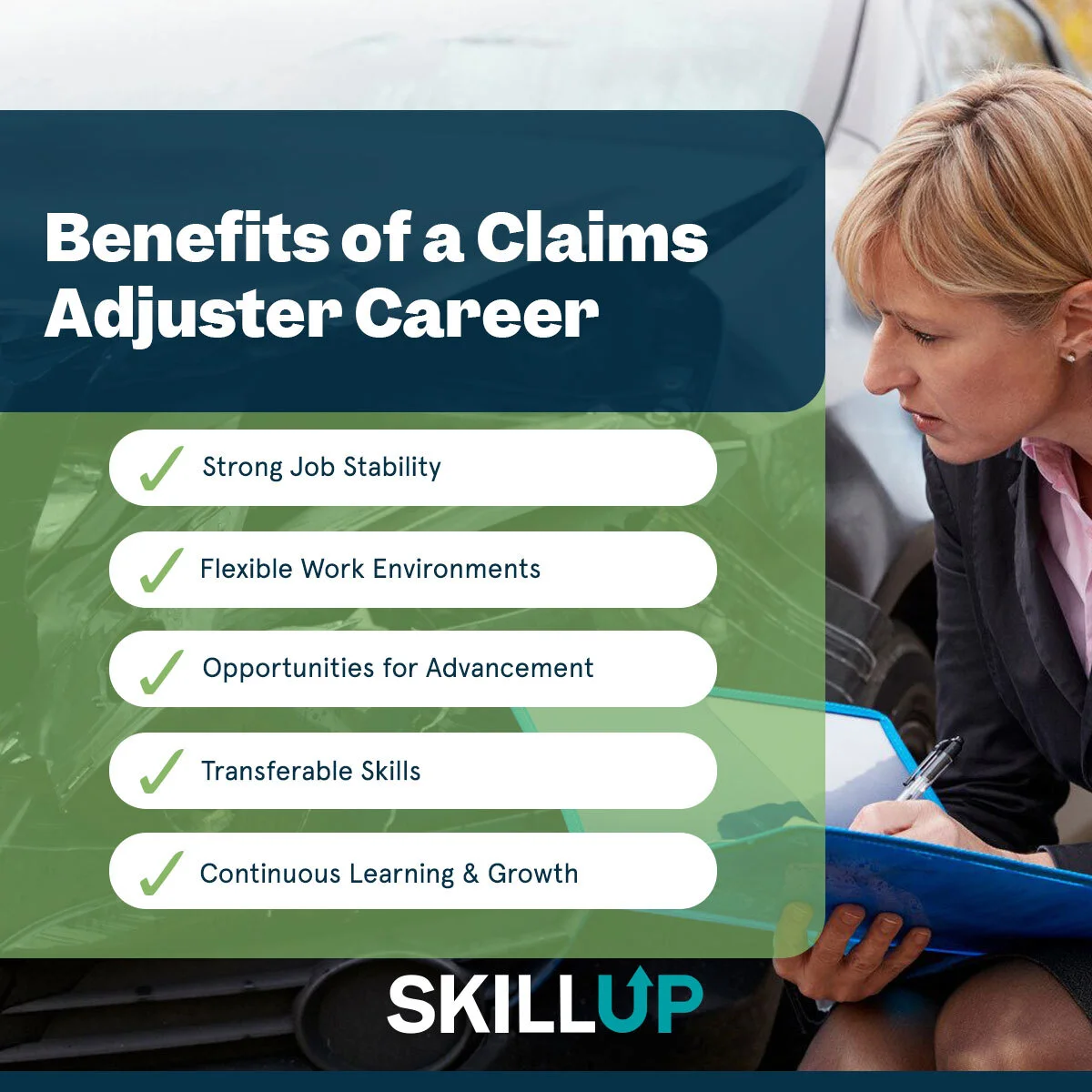
You don’t need a degree to work as a claims adjuster, but you will need a strong attention to detail, good people skills, and familiarity with state licensing rules.
Here’s how many people get started:
Earn a high school diploma or GED: Most entry-level positions or training programs require this baseline.
Complete a claims adjuster training program: Many community colleges and online platforms offer courses that teach you how to evaluate claims and apply insurance regulations.
Get licensed (if required in your state): Most states require adjusters to pass an exam and obtain a license, especially if you’re working independently or handling property/casualty claims.
Apply for entry-level claims roles: Many insurance companies hire and train new adjusters in-house. Field roles may require more experience or additional licensing.

No. Many adjusters enter the field through training programs and state licensing exams rather than a college degree.
Auto accidents, property damage, business liability, workers’ comp, personal injury, and more, depending on your role and employer.
Most do. You can check your state’s insurance department or use tools like AdjusterPro to find local licensing info.
Yes. With experience and certifications, adjusters can move into management, risk consulting, or specialty areas like catastrophe adjusting or fraud investigation.