For Job Seekers
For Career Exploring
Become a Partner
Search
Every business runs on numbers, and bookkeepers are the ones keeping those numbers in order. If you’re organized, detail-driven, and like working with spreadsheets or financial software, bookkeeping can be a steady and rewarding career path that doesn’t require a college degree.

Bookkeepers help businesses manage their day-to-day finances by tracking income, expenses, and financial transactions. Their work keeps budgets balanced, bills paid, and records ready for tax season or audits.
You might see roles like accounting clerk, accounts payable specialist, or accounting assistant, but the core responsibilities remain focused on recording and verifying financial data.
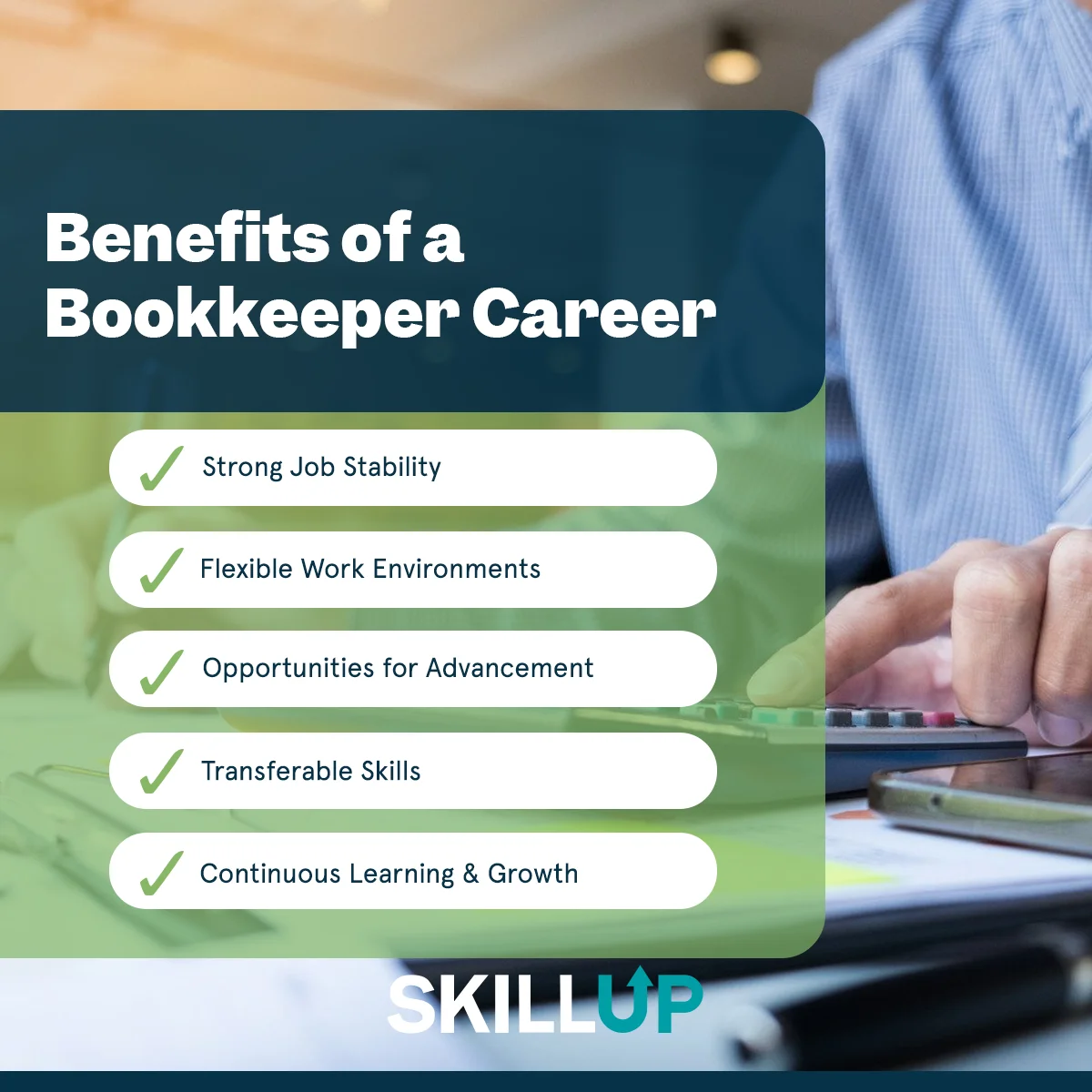
Bookkeeping is a great option if you’re looking for an entry-level role in finance or accounting. You can build core skills through online training or on-the-job experience.
Here’s a typical path into the field:
Earn a high school diploma or GED: Most employers require this as a starting point.
Learn basic accounting principles: Take an online course or community college class in bookkeeping, QuickBooks, or Excel.
Complete a bookkeeping certification (optional but helpful): Certification shows you understand double-entry accounting, payroll, and basic tax procedures.
Apply for entry-level roles: Many small businesses, startups, or accounting firms hire junior bookkeepers and train them on the job.

No. Many employers hire bookkeepers with just a high school diploma and some training or experience in financial software.
QuickBooks, Microsoft Excel, and sometimes Xero or Sage. Many employers are also looking for comfort with cloud-based accounting tools.
Nearly every industry—including healthcare, retail, construction, nonprofit, and hospitality—needs someone to manage the books.
Yes. Many bookkeepers freelance for multiple small businesses or run their own remote bookkeeping businesses.