For Job Seekers
For Career Exploring
Become a Partner
Search

Updated October 2026
If you’re picking a career to train for, there’s a fresh forecast out. In August, the U.S. Bureau of Labor Statistics (BLS) released its job projections through 2035. We paired them with the latest pay data, from May 2025, to pick 13 careers you can start without a four-year degree.
Every job here clears two bars:
We’ve also listed yearly openings for each job, and we’d argue they tell you more than growth rates do. Openings count every job that becomes available in a year, including those people who leave when they retire or change careers. Wind turbine technicians have one of the fastest growth rates on this list at 30%, which amounts to about 1,500 openings a year nationwide. Heavy truck drivers are projected to grow just 4% and still see about 214,500 openings a year, more than 140 times as many.
Two jobs from the last version of this list didn’t make the cut. BLS now projects computer support specialist jobs to shrink 3% and welding jobs to grow 2%, both below average. (They’re still hiring, with about 48,700 and 40,300 openings a year.)
Six of the 13 jobs are trades, and in several of them you’ll train through a paid apprenticeship. Our training catalog marks paid programs with a “Pays You” label, and our guide to how long apprenticeships take breaks down the timeline by trade. For more options, see our list of in-demand trade careers.
Electricians install, maintain, and repair the systems that carry power, lighting, communications, and controls. It’s the biggest trade on this list by the number of openings.
Our electrician career page covers how to get started.
HVAC techs install and repair heating, cooling, ventilation, and refrigeration systems. When there’s a heat wave or a cold snap, they’re the ones getting the calls.
See our HVAC technician career page for training paths.
Plumbers, pipefitters and steamfitters install and repair piping systems and fixtures. Like electricians, they usually learn the trade in an apprenticeship that’s paid from the start.
Our plumber career page walks through the apprenticeship route.
Solar installers assemble, set up, and maintain rooftop and other systems that turn sunlight into electricity. At 37%, it’s the fastest-growing job on this list, though it’s a small field, with about 4,200 openings a year.
Find out more on our solar installer career page.
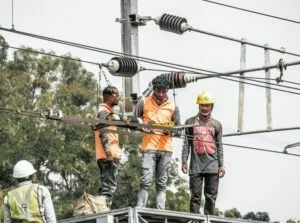
Wind techs maintain and repair wind turbines. By median pay, they’re the best-paid trade on this list.
Browse wind turbine training programs in our catalog.
These workers install, maintain, and repair factory equipment and other industrial machines. Most mechanics and maintenance workers learn through more than a year of on-the-job training, and millwrights usually finish an apprenticeship of about four years.
Every package on your porch rode in somebody’s truck, and the two driving jobs on this list add up to more than 367,000 openings a year.
Heavy truck drivers haul goods in big rigs from one location to another. You’ll need a commercial driver’s license (CDL), and most drivers train at a private truck-driving school or a community college program that lasts 3 to 6 months. After they’re hired, they usually get several more weeks of training.
Our truck driver career page covers CDL training.
Delivery drivers pick up, carry, and drop off packages and small shipments around a city or region. BLS lists a state driver’s license and a good driving record, and you’ll do most of your training in your first weeks on the job. That’s the shortest path in on this list.
Four healthcare jobs made the list, and for each one you’ll start with a certificate or diploma program, not a degree.
LPNs provide basic medical care to patients, and it’s the best-paid job on this list!
Our LPN career page explains the path.
Medical assistants handle office and clinical work, from booking appointments to taking patients’ vital signs. With 109,700 openings a year, it’s the largest healthcare job here.
Our guide to becoming a medical assistant goes deeper.
Medical records specialists put together, process, and maintain patient files. If you’d rather work with charts than with patients, start here.
See our medical records specialist career page for training options.
Dental assistants are part clinical and part front office. They care for patients, take X-rays, keep records, and schedule appointments.
Our guide to becoming a dental assistant walks through the steps.
Insurance agents reach potential customers, sell insurance, and help clients choose coverage. Insurance won’t make you the center of attention at a dinner party, but a median income of $62,280 certainly makes a compelling case for this career.
You’ll need a state license in each state where you sell, and life and health insurance takes a different license than property and casualty.
Our insurance sales agent career page has more on licensing.
Start with the tradeoff you can live with. Which matters more right now: a paycheck in a few weeks, or a bigger one after a year or more of training? Delivery driving gets you working fastest. LPNs, wind techs, and the apprenticeship trades pay more, but they’ll take longer to get into.
Location matters too. These figures are national, and they’ll look different in your state. Our state career guides list careers that don’t need a degree where you live.
Stuck between two? Our free career coaches can help you compare them.
Every job above is hiring, and getting started costs nothing!
By openings, heavy truck drivers (about 214,500 a year), delivery truck drivers (152,700), and medical assistants (109,700) lead this list. By growth rate, solar photovoltaic installers (37%) and wind turbine technicians (30%) lead the pack.
On this list, LPNs have the highest median pay at $64,400 a year, followed by wind turbine technicians ($64,120), industrial machinery mechanics and maintenance workers ($64,100), and plumbers ($63,800).
Delivery truck driving. Most new drivers need a high school diploma and a driver’s license, then learn on the job. Heavy truck drivers need a CDL first, and those training programs last 3 to 6 months.
Solar photovoltaic installers, at a projected 37% from 2025 to 2035. Wind turbine technicians come next at 30%.
Search our training catalog and sort by cost. Paid apprenticeships and Earn and Learn jobs pay you while you train, so you’re earning from day one.