For Job Seekers
For Career Exploring
Become a Partner
Search
Engines, diagnostics, repairs—auto techs keep people moving. If you enjoy solving problems and working with your hands, this career path could be the right fit, and you don’t need a college degree to get started.

Automotive technicians inspect, maintain, and repair vehicles of all types, from passenger cars to light trucks. They use both hand tools and computerized diagnostic equipment to identify problems, perform routine maintenance, and get vehicles safely back on the road.
You might also see this role listed as car mechanic, service technician, or automotive repair technician. Whether working at dealerships, independent repair shops, or fleet operations, automotive techs play a key role in transportation and logistics.
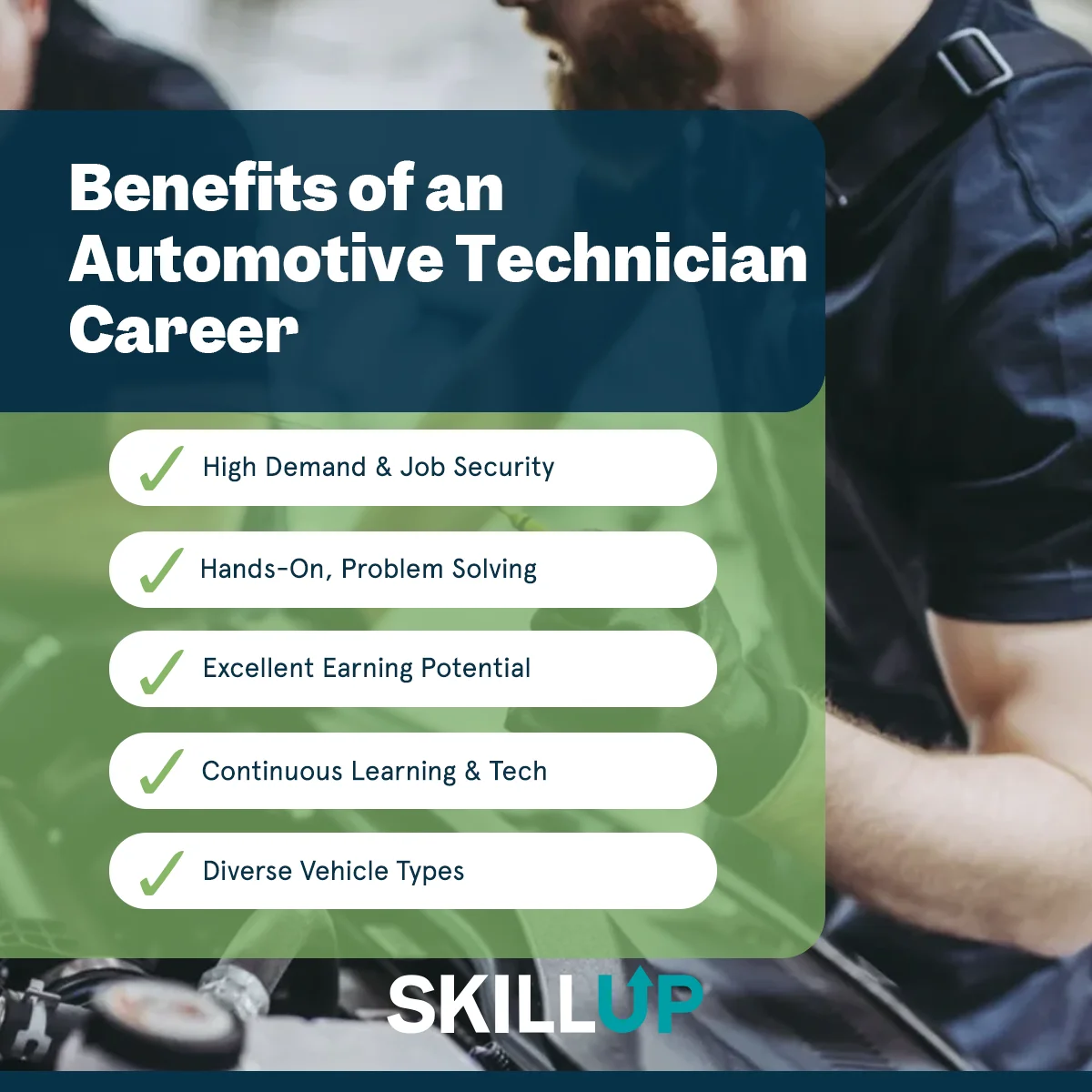
You don’t need a degree to become an auto technician, but you do need training, experience, and mechanical know-how. Many technicians start with a short program or jump into entry-level work and learn on the job.
Here’s how to get started:
Earn a high school diploma or GED: Most programs and employers require this basic credential.
Complete an automotive training program: Community colleges and trade schools offer programs in auto repair, diagnostics, and maintenance. Some take less than a year.
Start in an entry-level shop role: Many technicians begin as lube techs, tire techs, or shop assistants before moving into diagnostics and repairs.
Grow your skills over time: The more systems you learn—like brakes, electrical, or hybrid—the more valuable you become.

No. Most automotive technicians learn through hands-on training and short-term programs at trade schools or community colleges.
Many training programs take 6–12 months. Some employers offer on-the-job training for entry-level positions.
You’ll find them at dealerships, independent repair shops, quick lube centers, tire shops, and fleet service facilities.
Some dealerships require or offer certifications for brands like Ford, Toyota, or GM. These can lead to brand-specialist roles.
Required for technicians who service automotive air conditioning systems.
The industry standard for auto techs. You can certify in one or more areas like brakes, engine repair, or HVAC.