For Job Seekers
For Career Exploring
Become a Partner
Search
Code is everywhere, from the apps on your phone to the systems running global companies. Software developers are the people who build it, and you don’t need a four-year degree to join them.

Software developers design, build, test, and maintain computer applications, systems, and platforms. Some create customer-facing products like mobile apps or websites, while others build internal tools, databases, or infrastructure software that helps businesses run smoothly.
This career shows up under many job titles—software engineer, developer, application integration engineer, infrastructure engineer, and systems engineer, to name a few. The common thread: solving problems through code.
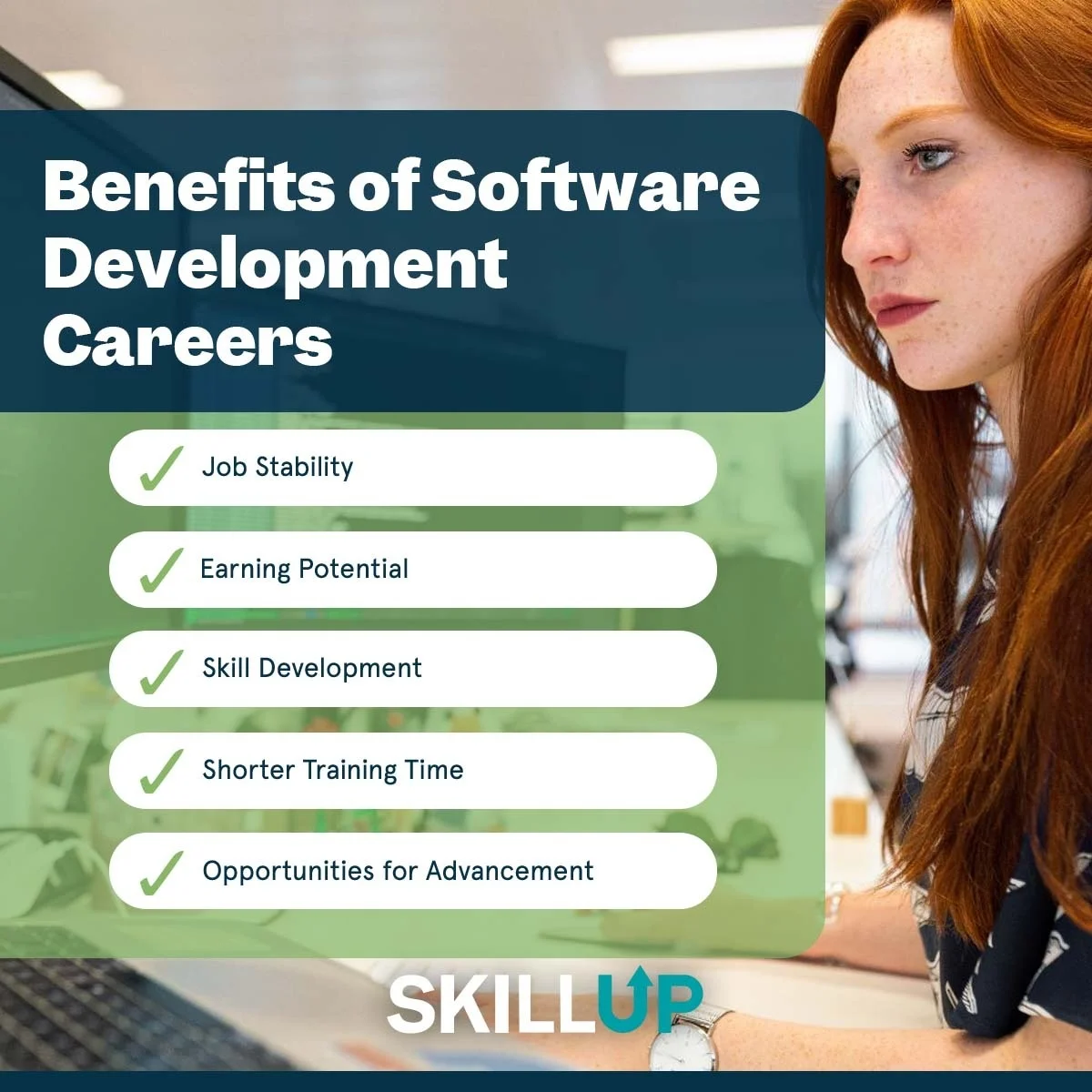
You don’t need a computer science degree to become a developer, but you do need persistence, practice, and a strong foundation in coding skills.
Here’s how many people get started:
Learn the basics of programming: Languages like Python, JavaScript, or Java are great starting points for beginners.
Complete a bootcamp or certificate program: Many developers launch their careers with short-term, project-based programs that teach coding fundamentals and real-world tools.
Build projects to show what you know: A portfolio of your work (even small projects) can help you stand out in job applications.
Contribute to open source or freelance work: Gain hands-on experience while building your resume and network.

No. Many developers are self-taught or trained through bootcamps or certification programs. Employers often care more about your skills and portfolio than your degree.
It depends on your path. Some people complete bootcamps in 3–6 months, while others learn part-time over a year or more. Building a solid portfolio is key.
The terms are often used interchangeably. In some companies, “engineer” may suggest a more formal role or one focused on systems and infrastructure, but both involve writing and managing code.
Yes. Software development is a launchpad for careers in DevOps, cloud architecture, data engineering, AI/ML, and technical leadership.