For Job Seekers
For Career Exploring
Become a Partner
Search
Good with your hands? Like seeing your work take shape? A career in sheet metal lets you build real things, learn on the job, and skip the student debt.

Sheet metal workers fabricate and install thin metal sheets used in heating and cooling systems, roofing, siding, ductwork, and custom metal projects. It’s a hands-on job that combines math, measuring, and movement, and it’s in demand in both residential and commercial construction.
You don’t need a college degree to work in this trade, but you do need the right training to start. Most sheet metal workers learn the craft through a registered apprenticeship.
Here’s how most people get into the field:
Apply for a sheet metal apprenticeship: The most common path is through a local Joint Apprenticeship Training Center (JATC), often affiliated with SMART (the Sheet Metal, Air, Rail and Transportation Union).
Learn math, measurement, and blueprint reading: Apprenticeships teach you how to use math and tools to solve real-world problems.
Get hands-on experience: Most programs offer full-time work from day one, with wage increases as your skills grow.
Earn safety and trade certifications: Depending on your role, you may need OSHA 10 or welding certifications along the way.

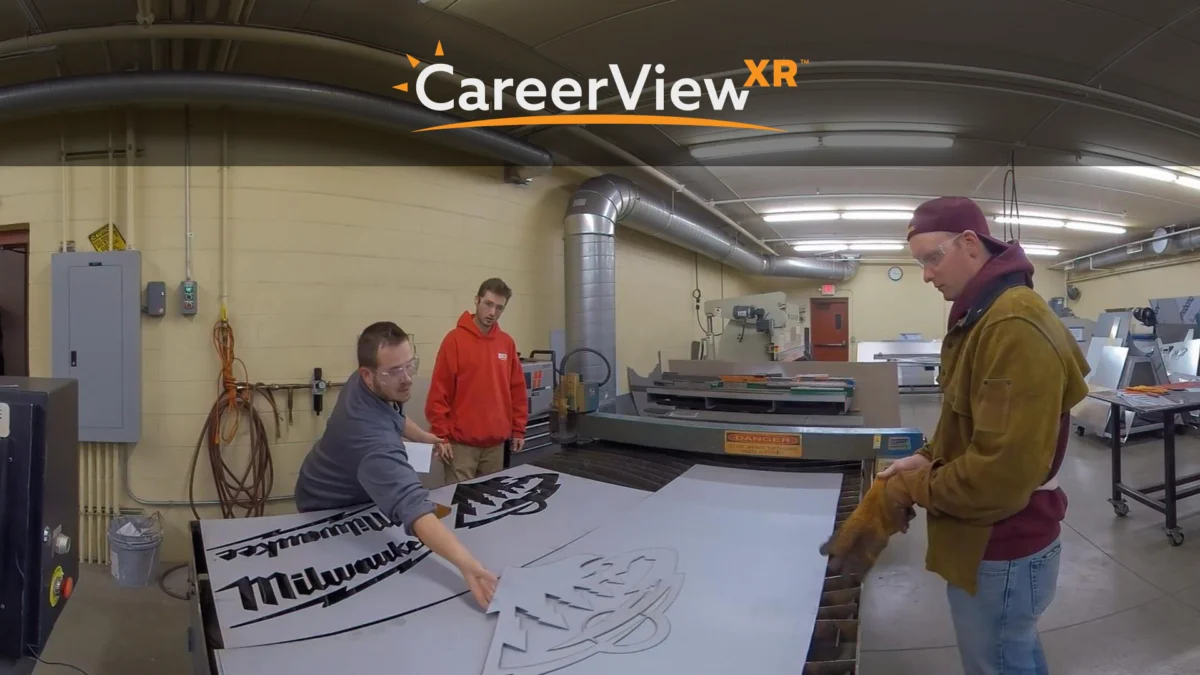
In partnership with CareerViewXR, we are bringing you immersive job tours. These engaging and accessible experiences allow you to explore various career paths from any internet-connected device, including VR headsets.
No. You can start through a paid apprenticeship that combines classroom training and on-the-job experience.
Most apprenticeship programs last 4–5 years, but you’ll start earning a paycheck from the beginning.
Yes, many sheet metal workers join a union such as SMART. Union apprenticeships often offer higher wages, better benefits, and access to nationwide job opportunities.
They install HVAC ducts, metal roofing, siding, gutters, commercial kitchen systems, and more. Some also work in fabrication shops creating custom pieces.
Yes. Many apprenticeships are designed for people just starting out and teach everything you need to know, including safety, tools, and trade math.
Entry-level workers start around $38,000, but experienced journeymen can earn close to six figures, especially with union wages and overtime.