For Job Seekers
For Career Exploring
Become a Partner
Search
Healthcare careers aren’t limited to doctors and nurses. Medical assistants help clinics and offices run smoothly by combining patient care with administrative support. If you’re organized, people-focused, and want a steady role in healthcare, this could be your way in.

Medical assistants support physicians and medical staff by handling both front desk responsibilities and basic patient care. Depending on where you work, you could spend your day checking patients in, drawing blood, recording vital signs, or submitting insurance claims.
You might also see titles like certified medical assistant (CMA), clinical medical assistant, or doctor’s assistant—but the work centers on keeping patient visits running efficiently and compassionately.
Administrative responsibilities may include:
Clinical duties may include:
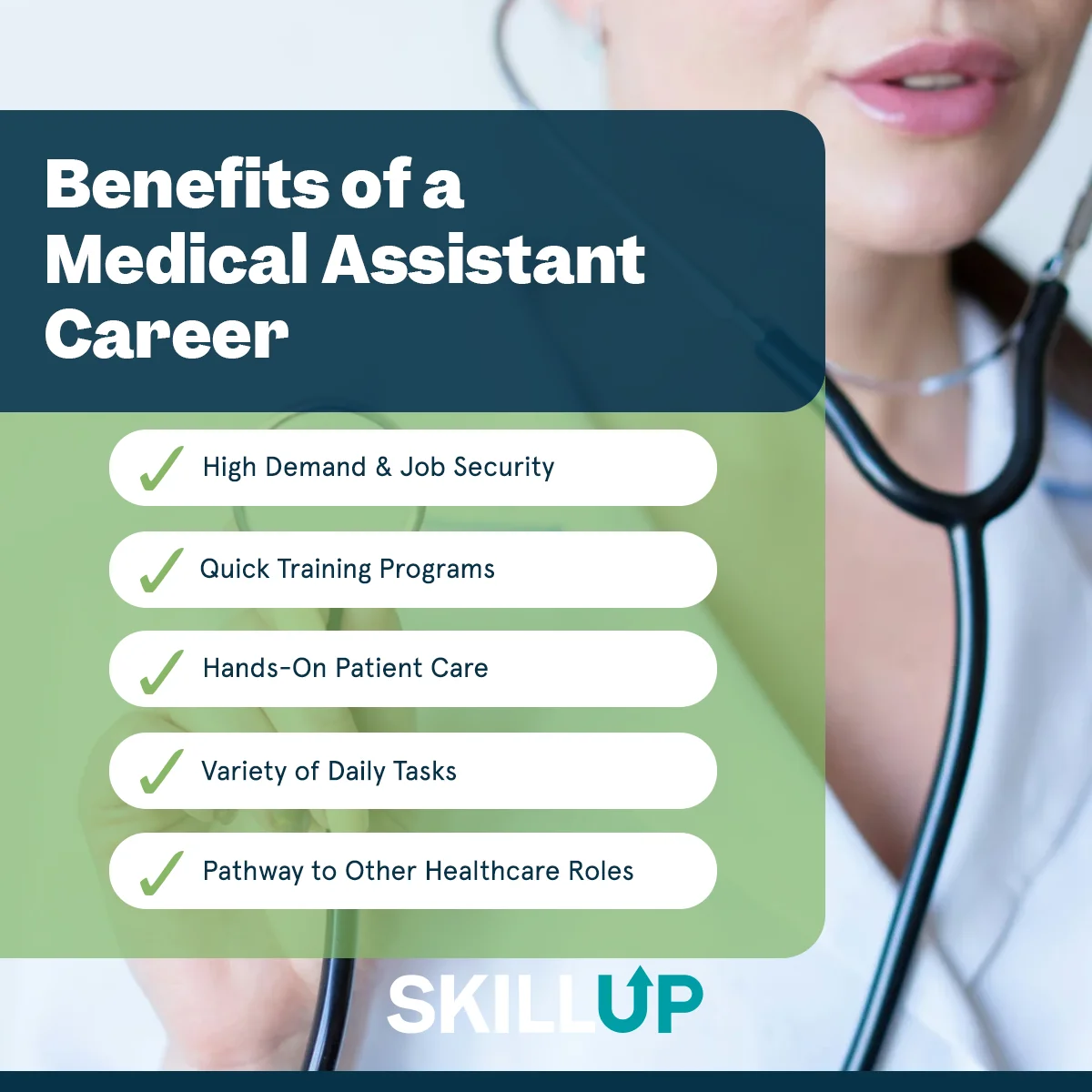
Medical assisting is one of the fastest ways to enter the healthcare field. With the right training and certification, you can qualify for most jobs in under a year.
Here’s how many people get started:
Complete a medical assisting program: These are available at trade schools, community colleges, or online. Programs typically take 9–12 months and include hands-on labs or externships.
Earn a national certification (recommended): While not always required, certifications like CMA or RMA are often preferred by employers.
Apply for entry-level positions: Many clinics and outpatient centers hire new grads directly from certification programs.

No. Most people complete a short-term certification program through a trade school, training provider, or community college.
Administrative MAs focus on scheduling, records, and billing. Clinical MAs work more directly with patients: taking vitals, prepping for exams, or assisting with procedures. Many roles combine both.
Not quite. MAs provide support under the direction of nurses and doctors, but they don’t hold nursing licenses or perform high-level clinical care.
Some common titles include:
Yes. Many medical assistants go on to become LPNs, RNs, or office managers after gaining experience and additional education.